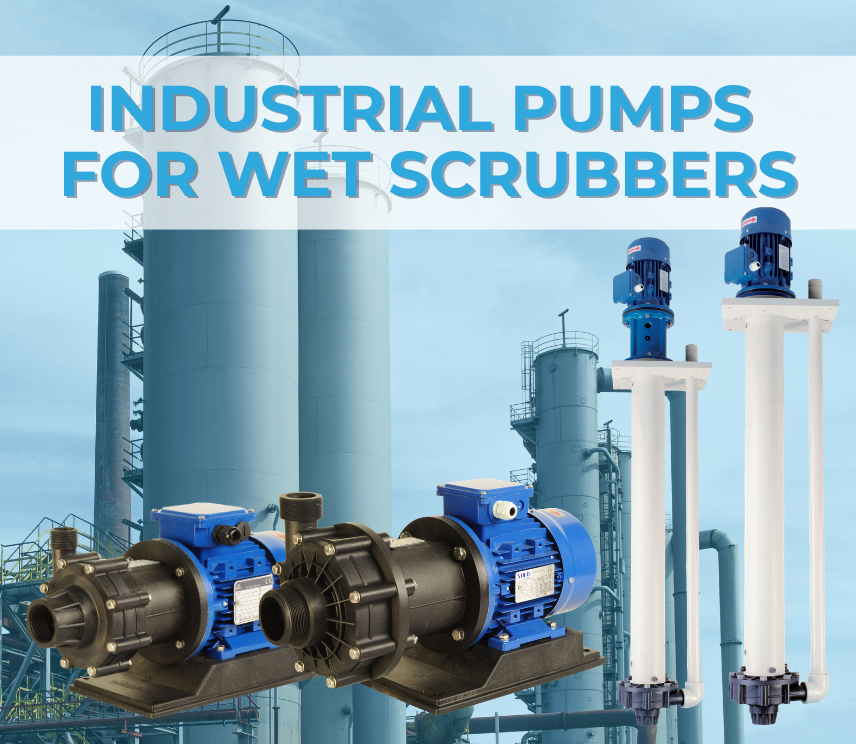
Scrubbers play a vital role in implementing emission control systems in compliance with ESG regulations, and their efficiency depends almost entirely on the performance of the installed chemical pumps.
In this guide, we will explain how a wet scrubber works and outline the challenges faced by the chemical pumps used in air pollution control systems.
What is a wet scrubber and how does it work?
A wet scrubber is a system designed to remove particulate matter and harmful gases from industrial exhaust streams. The process involves a “washing” phase in which the gas to be purified comes into contact with a liquid — usually water or a water-based chemical solution — that absorbs or neutralizes pollutants.
The working cycle:
- Gas intake: the contaminated air enters the wet scrubber chamber from the bottom.
- Liquid injection: centrifugal pumps move the washing liquid to the upper part of the tower, where it is sprayed downwards.
- Absorption: as the gas rises, it meets the liquid droplets. Pollutants are transferred from the air to the fluid.
- Recirculation: the “dirty” liquid is collected in a tank and recirculated by the pump into the system, or sent for treatment.
Common fluids and industrial applications
Wet scrubbers are versatile and used in various sectors to manage aggressive chemicals:
- Neutralization of acid fumes: use of caustic soda or lime to remove hydrogen sulfide, hydrochloric acid, or sulfur dioxide.
- Gas depuration: use of monoethanolamine (MEA) to remove carbon dioxide.
- Particulate removal: simple water-based washing for dust control.
Why choose GemmeCotti chemical pumps for air treatment?
Our pumps are specifically designed to meet the demanding requirements of the air treatment and flue gas cleaning industries.
Choosing GemmeCotti pumps means investing in long-term reliability: thanks to the use of corrosion-resistant thermoplastic materials such as Polypropylene (PP) and PVDF, we guarantee superior chemical resistance compared to traditional metals, drastically reducing maintenance costs and plant downtime.
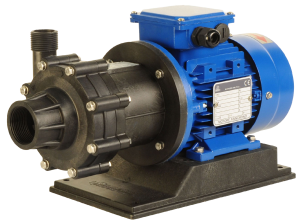
HTM PP/PVDF SERIES MAGNETIC DRIVE HORIZONTAL CENTRIFUGAL PUMPS
HTM PP/PVDF magnetic drive pumps for acids feature a special sealless design that ensures the total absence of leakage and emissions into the envir
onment.
Technical data:
– Flow rate up to 130 m³/h
– Head up to 48 mlc
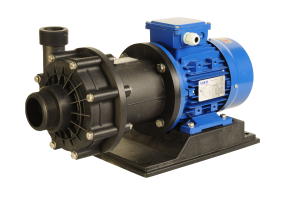
HCO SERIES MECHANICAL SEAL HORIZONTAL CENTRIFUGAL PUMPS
HCO mechanical seal centrifugal pumps are the most suitable solution for applications requiring the pumping of liquids with suspended solids. Their semi-open impeller design allows for the handling of dirty fluids (non-abrasive solids – max. 5% – max. size 3 mm).
Technical data:
– Flow rate up to 130 m³/h
– Head up to 48 mlc
VERTICAL CENTRIFUGAL PUMPS
Vertical centrifugal pumps are suitable for applications requiring the pump column to be immersed in the liquid (tanks, reservoirs, sumps, etc.).
HV SERIES MONOBLOCK VERTICAL CENTRIFUGAL PUMPS
HV vertical pumps are available with different column lengths (500 – 800 – 1000 mm).
Technical data:
– Flow rate up to 40 m³/h
– Head up to 22 mlc
HVL SERIES VERTICAL CENTRIFUGAL PUMPS WITH BRACKET
HVL vertical pumps are available with various column lengths, from 500 mm up to 2000 mm.
Technical data:
– Flow rate up to 130 m³/h
– Head up to 48 mlc

Selecting the right pump is essential to ensure process safety.
Contact us at info@gemmecotti.com for a personalized consultation: we will help you identify the most suitable model and materials for your specific operating requirements.
FAQ
What is the best material for a wet scrubber pump?
The choice depends on the chemical being handled. Polypropylene (PP) is excellent for many acids and alkalis at moderate temperatures. PVDF is preferred for higher temperatures or highly concentrated chemicals.
Can I use a magnetic drive pump if there are solids in the liquid?
Generally, no. Magnetic drive pumps are designed for clean liquids, as particles may affect their service life or compromise long-term reliability. If the application involves the removal of dust or particulate matter, we recommend our HCO series with mechanical seal or vertical pumps HV /HVL model.
How can I prevent cavitation in wet scrubber pumps?
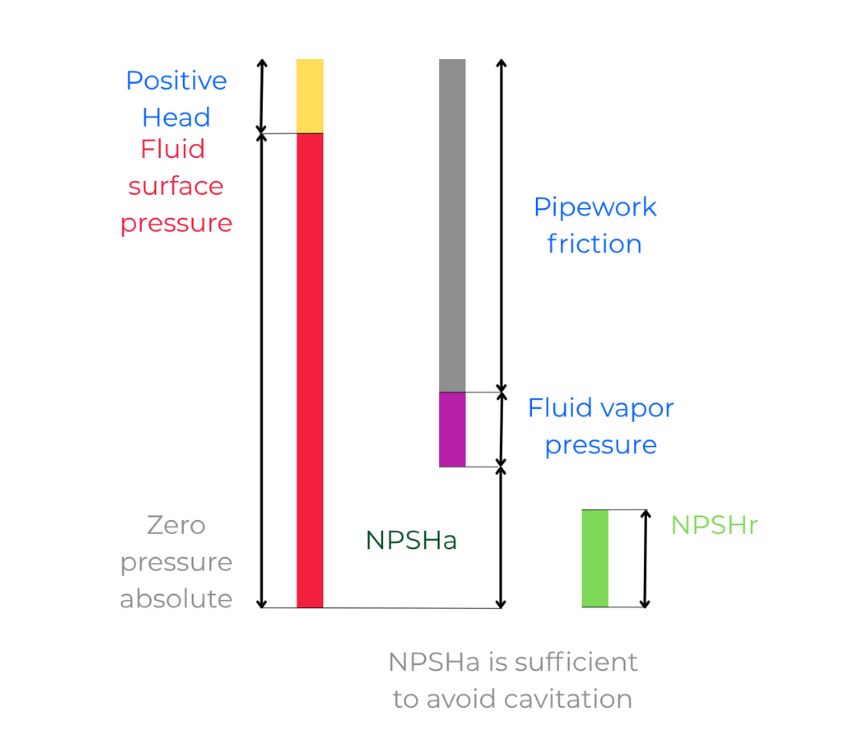
Ensure that the NPSH available in your system is higher than the NPSH required by the pump. Our technical department can assist you with the correct sizing calculations. Contact us at info@gemmecotti.com
What is the advantage of a vertical pump in a wet scrubber system?
Vertical pumps can be installed with the column directly immersed in the fluid and are capable of handling liquids containing solids. This makes them an ideal solution for wet scrubber systems.