Pumps ready on stock? A bigger warehouse is our solution

Pumps ready on stock? A bigger warehouse is our solution

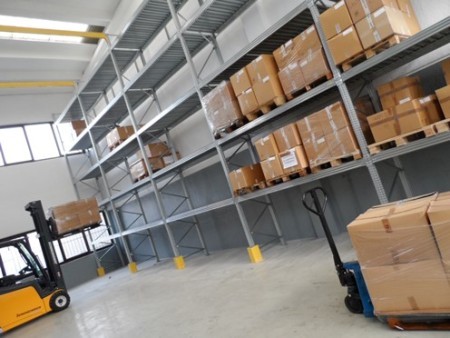
More and more often our customers want high quality pumps delivered in the shortest possible time and to meet these requirements we have recently improved our logistic system and bought a new 500 m2 warehouse where in November 2013 we installed 6-meter-high shelvings.
Thanks to this additional space we can keep even more spare parts and complete pumps on stock so that our customers will receive an immediate reply and won’t have to wait unnecessarily long time to have the ordered goods.
The current delivery time of our standard pumps are:

Mag-drive centrifugal pumps in plastic HTM PP/PVDF: 3-4 working days

GemmeCotti shelvings

GemmeCotti shelvings

Mag-drive turbine pumps in plastic mod. HTT: 3-4 working days
Mag-drive centrifugal pumps in AISI316 HTM SS: 1-2 weeks
Mechanical seal centrifugal pumps mod. HCO: 1-2 weeks
Mag drive vane pumps in AISI 316 mod. HTP: 1-2 weeks
Mag drive turbine pumps in AISI316 mod. HTA: 1-2 weeks
Vertical pumps HV /HVL PP: 1-2 weeks

Read More
There's a suitable material for each application

There’s a suitable material for each application

In my latest article about the different materials used for chemical pumps I wrote a brief guide helpful for a first materials selection according to their properties and characteristics. Now I would like to analyze each material from the point of view of their typical applications.


Polypropylene (PP):

Mechanical applications: PP is used for mechanical parts in corrosive environments. Compared to polyethylene with a high molecular weight, polypropylene has a higher traction resistance.

Alimentary applications: physiologically inert when it has a natural color, polypropylene is suitable for  use in contact with foods.

Electrical applications: good dielectric characteristics and weather-proof.

Chemical applications: PP is widely used in chemical industries because of its high resistance to acids and alkali. Thanks to its higher resistance to temperature than PVC  it’s used for valves, flanges gears etc. in chemical, galvanic and petrochemical industry. It’s not suitable for use with high concentration oxidizing acids.


PVDF:

Chemical applications: the high chemical resistance to acids and alkali is typical of fluorinate polymers (PVDF) that’s why it’s mainly used for parts in petrochemical and chemical industries.

Alimentary applications: physiologically inert when it has a natural color, it’s approved by different organizations for use in contact with foods. It’s often used because of this characteristics, especially in alimentary machines and in pumps for alimentary liquids.

Electrical applications: good dielectric characteristics, self-extinguishing without adding halogens and weather-proof

Mechanical applications: the low friction coefficient makes is suitable for bearings even if they work in water.


PTFE

Mechanical applications: the low coefficient of friction makes it useful for bearings unless they have to support a great weight.

Alimentary applications:  physiologically inert, it’s approved for use in contact with food by some organizations, but in some countries it’s questioned the possible use in contact with food.

Electrical applications: thanks to the good dielectric characteristics, the self-extinguishing and the stability to bad weather it’s used more and more in this field.

Chemical applications:  typical of fluorinate polymers is the high chemical resistance to acids and alkali. It’s main use is for components in petrochemical and chemical industry.


EPDM

Mechanical applications: Gaskets, section bars and technical items for cars, handmade articles for anti-acid protections.


AISI316

Suitable for plants for production of nitric and sulphuric acid and for the relative equipment (pumps, valves and pipes). It’s used in very aggressive environments (textile industry, paper industry, oenological- alimentary  industry, and especially naval industry).

Read More
A brief guide to choose the suitable pump materials for chemical applications

A brief guide to choose the suitable pump materials for chemical applications

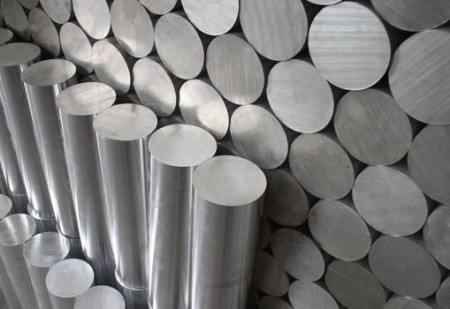
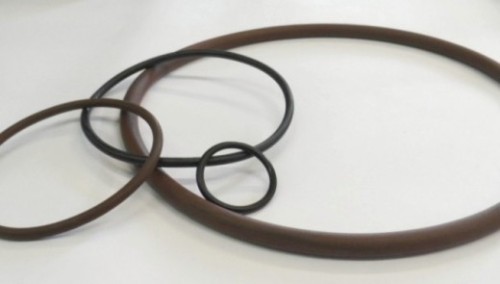
When dealing with acids it’s important to use suitable chemical pump materials resistant to corrosion which are highly efficient and require minimum maintenance. That’s why, after years of experience in chemical pumps field, we decided to use Polypropylene, PVDF and AISI316 as standard materials for our pumps and EPDM, Viton and PTFE for the o-rings.

Every material has its own properties and characteristics that make it suitable for pumping different acids because, as I wrote in my previous article about pump selection, it’s really important to choose the right pump material for every chemical application.

 Polypropylene (PP)

  1. Polypropylene is well known with the name Moplen (™)
  2. It’s a thermoplastic material extremely resistant to many solvents, bases and acids such as for example acetone, caustic soda and chloridric acid.
  3. It’s not suitable for concentrated, oxidizing acids.
  4. It’s used in many different industries for parts subjected to relatively modest forces.
  5. Temperature range for PP pumps is from 4° to 60°C.

Polyvinylidene fluoride (PVDF)

  1. It’s a thermoplastic material of the fluoropolymer family and it’s used generally in special applications requiring the highest purity, strength, and resistance to solvents, acids, saline solutions, to alkali and bases.
  2. It’s mainly used with liquids such as for example sodium hypochlorite, concentrated sulfuric acid, nitric acid, gasoline.
  3. It doesn’t undergo deformation under loads and has a high mechanical resistance.

  4. Temperature range for PVDF pumps is from -40° to 90°C.

 Stainless steel AISI316

  1. It’s a metallic material used when both the properties of steel and the resistance to corrosion are required.
  2. Particularly indicated for pumps working with high temperature liquids, oils, kerosene, alcohols.
  3. It’s used to pump acids up to a maximum temperature of 160°C

Also the o-rings are in contact with the liquid and their material is very important to avoid leakage.

EPDM

  1. It’s an elastomer with a good resistance to heat, ketones, ordinary diluted acids and alkalines.
  2. Temperature range: from -40°C to 140° C

  3. We usually use EPDM o-rings as standard with PP pumps

VITON

  1. It’s a fluoropolymer elastomer with a good resistance to hydrocarbons, acids, fuels, mineral and vegetable oils but it’s incompatible with ketones and organic acids
  2. Temperature up to 150°C
  3. We usually use VITON as standard with PVDF and AISI316 pumps

PTFE

  1. Polytetrafluoroethylene known also as Teflon (™).
  2. It’s highly resistant to the attack of acids and basis  in corrosive environments but it has poor mechanical properties such as traction and compression.
  3. T

    emperature range: from 4°C to 260°C

These are general rules that can be useful for chosing pump material but it’s better to consult a good chemical compatibility chart to select the best material for each chemical application.

Read More
Our New website is online!

Our New website is online!

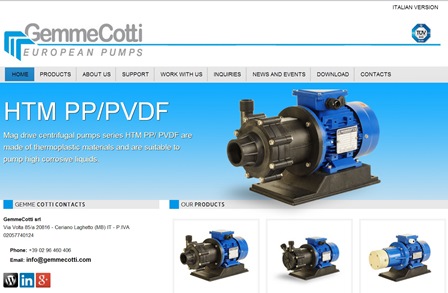
We are really excited to announce the launch of our new GemmeCotti website designed with a fresh and innovate look, user-friendly navigation and up-to-date contents. There are many improvements that will help users to find the information they are looking for. The main new features are:

  1. Immediate and easy access to the complete range of pumps. In the home page users can see the photos and a brief description of each kind of pumps supplied by GemmeCotti and with a simple click it’s possible to have a look at the pumps available for each category.
  2. Up-to-date news about our company and our pumps for acids available directly from the home page.
  3. Direct links to our social networks. GemmeCotti is active on different social media such as for example Google+ and LinkedIn (with a company page and a company group) where we often publish news, photos, discussions and technical information. Moreover we have a new blog full of different articles regarding GemmeCotti world and events, technical aspects about pumps for acids and pump designing/manufacturing process.
  4. Users can subscribe to our periodical newsletter where we share news about products, services, events, marketing activities and special offers. A useful way to be always up-to-date about GemmeCotti world through a simple email.website home page
  5. Detailed technical description for each pump  with all the features and technical data. Users can also download the product specific catalogues, the technical drawings and the use and maintenance manual.pump description
  6. Download page with all the pump catalogues available.download page
  7. For those interested in receiving a quotation for our pumps or spare parts there is a form to fill in  suitable to send enquiries.
  8. Full company presentation with details about our services, our mission and values.
  9. For a first selection of the pump material, users can find a chemical compatibility chart with the main liquids that can be pumped and the standard materials used in GemmeCotti pumps. chemical compatibility chartWe hope you enjoy our new website and we wish you a great visit! www.gemmecotti.com
Read More
Work experience for students, Internship in GemmeCotti

Work experience for students, Internship in GemmeCotti

GemmeCotti internsEvery summer we offer an internship in GemmeCotti to high-school students who can use the things they have learned in school and put them into practice. In this way the students gain work experience in their field of study that can be helpful to finish the final year of school. This year our interns in the sales/marketing department are Eleonora and Jessica, two young girls who are studying business and foreign languages.

We took this opportunity and, after some weeks, asked few questions to Jessica about her experience in GemmeCotti.


Why have you decided to do an internship after the school year?

Because I wanted see how it feels to work in a company. I’ve never had this opportunity before and I think it’s important for me to find out if this is what I really want to do in the future.


Which purposes did you want to reach during your internship?

I had three main purposes in mind :

1- I wanted to experience the work environment for the first time because working eight hours in a company is really different from the school life.

2- I wanted to make a comparison between going to school and working so that next year I will be able to decide whether it’ll better to go on studying or to find a job.

3- I wanted to get the awareness of what I would really like to do in the future and if, in my case, I could be interested in working in a company.


So, what do you want to be when you grow up?

I’m still not sure of what I would like to do but, as I have been studying foreign languages at school, I hope that I will find a job which will let me go on practicing them. Now, after that I’ve almost finished my internship , I can say that I have found this kind of job interesting and therefore I will take into consideration to work in a company like GemmeCotti in the future.


Would you consider you work experience here useful so far?

Definately! I have had the opportunity to see directly how people work in a company and now I can decide if  this kind of job could be what I am looking for. I am very satisfied with this internship because it has taught me how working in a company is and what cooperating with other people means.  Moreover, there are more responsibilities in the working environment than at school; for this reason I think an experience like this makes young people more responsible.


What has been the most positive aspect of this internship?

What I have appreciated the most was the possibility to see how people work in a company and to cooperate with them. Moreover, if I had to write an analysis essay of these weeks, I would say that this experience has been very positive because I have reached my purposes, I have learned something new and I have also finished several tasks with the help of my tutor and the other colleagues who have been very helpful in case of need. At the beginning I was a little shy because this was the first time I had worked in a company with new people, but after the first few days I got to know the place and the colleagues, who have been very nice to me.


And what aspect did you like the least?

I have not found negative aspects.  Maybe the most difficult thing was to get used to the working hours because I have never worked for eight hours in a row.  But time has passed really fast anyway!


Would you suggest this experience to your schoolmates?

Yes because it’s a great opportunity to put into practice your knowledge and to learn something new with a direct experience. During these weeks you can also get to know the working environment and you will not be completely unprepared when you start working in the future.


We thank Jessica and Eleonora for their job. It’s been a real pleasure to work with them during these weeks and we will wait for the next interns.

Read More
HCM pumps, the latest challenge of GemmeCotti technical office

HCM pumps, the latest challenge of GemmeCotti technical office

One of the latest challenge of GemmeCotti technical department is the development of magnetic drive centrifugal pumps series HCM. These new pumps are designed with the innovative sealless mag-drive system and they are manufactured using thermoplastic materials highly resistant to corrosive liquids. We have already produced the two biggest sizes (HCM 100-80 and HCM 80-65) and we are about to expand the series with smaller pumps which can cover a wide range of performances.

The main features of HCM pumps are:

flow rate up to 140 m3/h, head up to 50 mlc;HCM PUMPS

– manufactured using thermoplastic materials: PP (Polypropylene) or PVDF (Polyvinylidene difluoride);

– high quality materials in contact with the liquid: casing, impeller: PP/PVDF, o-ring: EPDM/VITON, shaft and ring: pure alumina 99,7%, bushings: PTFEC

– heavy walled casing machined from a solid block which guarantees a very high resistance to internal and external corrosion;

– integral flanged connections which ensure a zero leakage;

– the transmission of the motion occurs through magnetic joints without using mechanical seals. The synchronous magnetic coupling transmits torque from the external magnet connected to the electric motor, through a static rear casing, to the driven internal magnet inside the pump. This solution is ideal for pumping acids and dangerous liquids because it assures zero leakage of liquid or emissions;

These pumps are mainly used for severe applications where it’s necessary to transfer high corrosive liquids, like for example sulfuric acid, sodium hydroxide, sodium hypochlorite, brominated, chlorinated and fluorinated solutions.

We have already started to promote these new pumps to our customers and their response is helping us to proceed with the design of the entire series according to their needs and precious advices. We are now ready to start the mass production and we will keep you posted about further future developments.


Read More
Newsletter