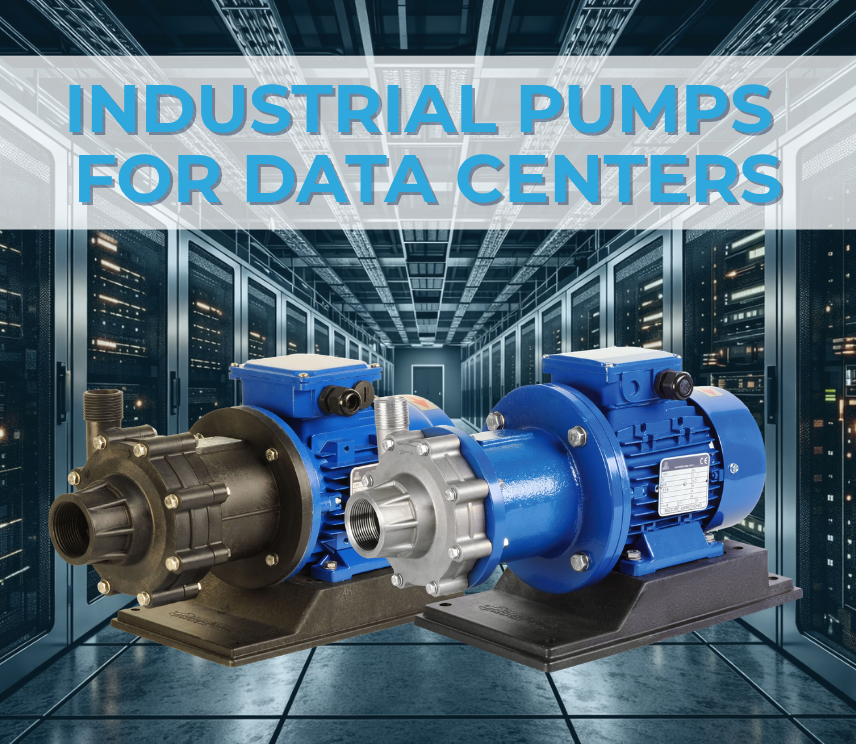
industrial pumps for data centers

Industrial pumps in data centers: GemmeCotti solutions for microprocessor cooling systems

Data centers are facing an increasingly complex challenge: cooling microprocessors of growing power and high density. With the rise of artificial intelligence, cloud computing, and high-performance computing, traditional air-cooling systems are no longer sufficient. For this reason, more and more data centers are being equipped with liquid cooling systems, which allow heat to be dissipated directly from the source: the microprocessors.

In these systems, circulation pumps play a fundamental role, as they ensure the constant flow of coolant within the cooling circuits.

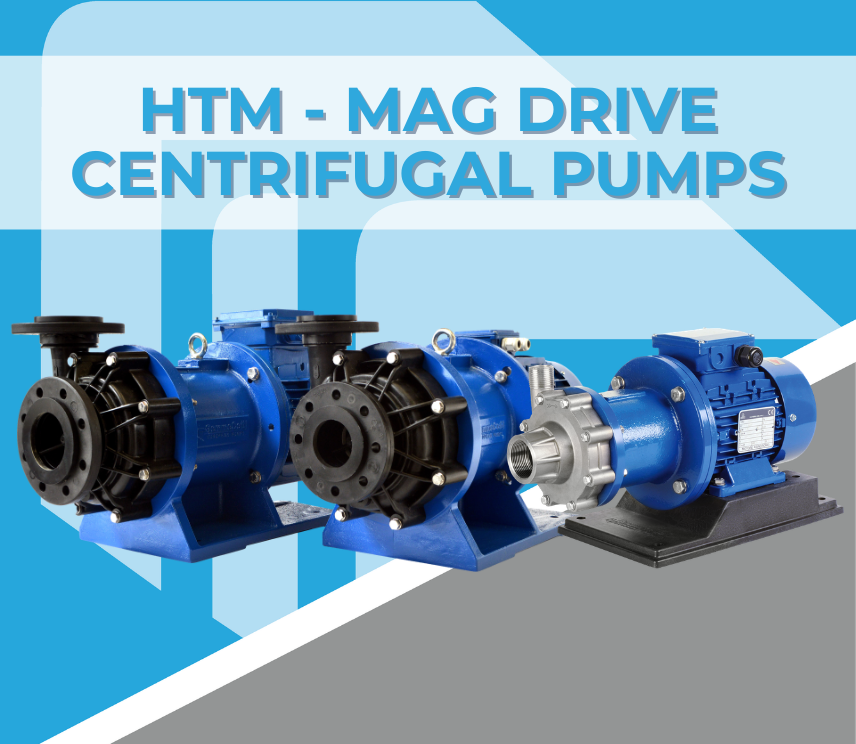
GemmeCotti’s magnetic drive centrifugal pumps, available in PP, PVDF, and AISI 316 stainless steel, represent a reliable and efficient solution for various data center cooling technologies.

What is the purpose of a cooling pump in a data center?

The primary function of the pump is to manage the recirculation of the cooling medium (liquid) throughout the entire circuit. This process is vital for dissipating the heat generated by electronic equipment and servers which, in the absence of constant flow, would suffer critical overheating.

A thermally uncontrolled environment leads to serious risks, including:

  • Hardware failure and reduction of component lifespan.
  • Data loss and service interruptions (downtime).
  • Increased energy costs, as the entire system must work with greater intensity to compensate for heat accumulation.

How pumps work in data center cooling systems

In cooling systems, pumps ensure the continuous flow of coolant within the cooling circuit. The liquid removes the heat generated by the microprocessors and carries it to a heat exchanger for dissipation.

The fluid used can be water, water-glycol mixtures, or specific dielectric fluids for electronic cooling. Regardless of the liquid type, the pumps must guarantee reliable and continuous operation, avoiding leaks and minimizing maintenance interventions.

GemmeCotti magnetic drive pumps are particularly suitable for these applications because, having no mechanical seal, they guarantee an airtight seal of the hydraulic part, eliminating the risk of unwanted fluid leaks into the system.

GemmeCotti magnetic pumps: reliability and operational safety

Magnetic drive pumps represent a particularly suitable solution for data center cooling systems, where reliability, operational safety, and continuity of operation are fundamental elements.

  • Elimination of Leaks: Unlike traditional pumps with mechanical seals, magnetic pumps eliminate the risk of fluid leaks thanks to the transmission of movement via magnetic coupling.
  • Reduced Maintenance: The absence of mechanical seals also reduces maintenance interventions and increases system reliability—essential characteristics for critical infrastructures like data centers that must operate continuously.
  • Industrial Design: GemmeCotti HTM magnetic drive centrifugal pumps are designed specifically for industrial applications requiring safety, chemical resistance, and continuous operation. They can be integrated into various industrial cooling systems and liquid cooling circuits.

Solutions and materials for every need

The HTM range is available in different materials to adapt to the various fluids used in data center cooling circuits:

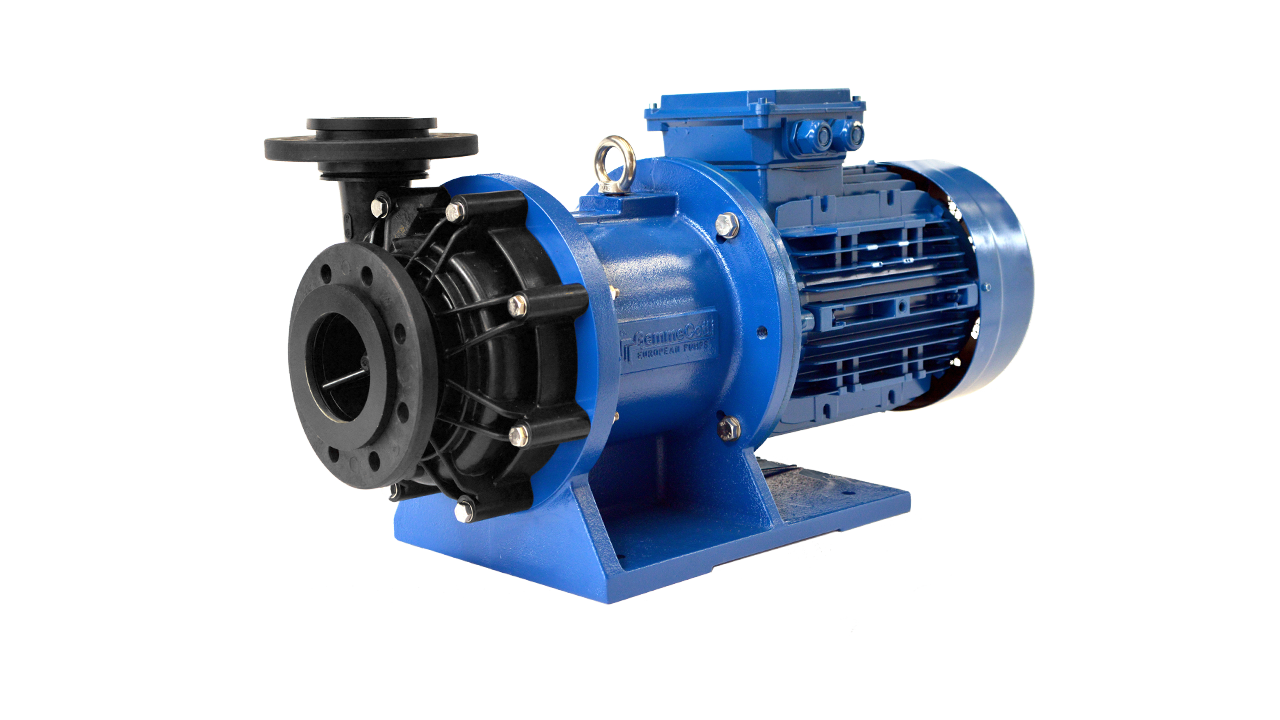
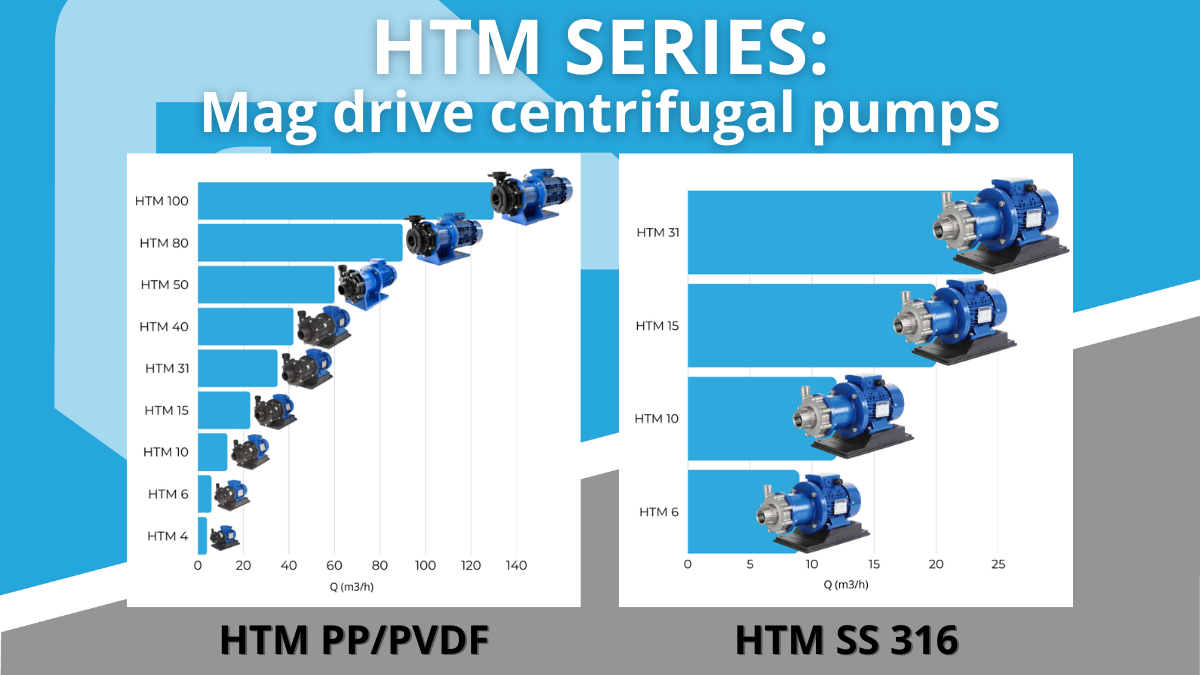
  • HTM Pumps in PP and PVDF: These offer high chemical resistance and are particularly indicated when using aggressive fluids or specific refrigerants. The thermoplastic construction guarantees excellent corrosion resistance and a long operational life.
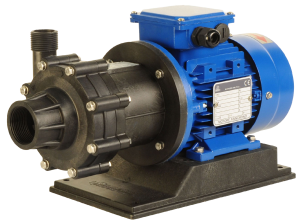
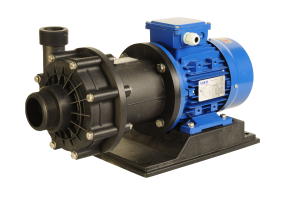
  • HTM 10 PP HTM 100


  • HTM Pumps in AISI 316 Stainless Steel: These represent a robust and reliable solution for applications requiring greater mechanical resistance and compatibility with different process fluids.

htm-ss-316

Technical Performance

To meet every need, the HTM PP/PVDF series offers performance at both 50 Hz and 60 Hz:

  • Max Flow Rate: up to 130 m³/h / 528 USGPM.
  • Max Head: up to 48 m / 148 ft.
  • Temperature Range: PP max 60°C (158°F) – PVDF max 90°C (194°F).
  • Max Viscosity: 200 cSt.
  • Nominal Pressure: NP 6 bar (90 PSI) at 20°C (68°F).

Thanks to magnetic drive technology, high reliability, and the possibility to choose between different material configurations, GemmeCotti HTM pumps represent an effective solution for data center cooling systems. These components guarantee the necessary precision in fluid handling, absence of vibrations, and total safety against refrigerant leaks.

For more information on GemmeCotti solutions for your cooling systems, contact our technical team at info@gemmecotti.com

FAQ

Which pumps are used in data center cooling systems? Industrial pumps are used in data center cooling systems to circulate the coolant (liquid) in liquid cooling circuits. Magnetic drive centrifugal pumps, such as those produced by GemmeCotti, are highly valued and are the best choice for their reliability and absolute absence of leaks.

Why use magnetic drive pumps in cooling systems? These pumps are ideal because they eliminate the risk of fluid leaks near the servers, as they do not use mechanical seals subject to wear. Furthermore, the absence of seals reduces maintenance and increases reliability, ensuring the operational continuity required for critical infrastructure.

Which GemmeCotti pumps are most suitable for use in cooling systems? HTM magnetic drive centrifugal pumps in PP, PVDF, and AISI 316 stainless steel are reliable solutions for industrial cooling systems and liquid cooling circuits. With flow rates from 0.1 m³/h to 130 m³/h, they are the best choice for every need.

Read More
A guide to Net Positive Suction Head (NPSH)

A guide to Net Positive Suction Head (NPSH)

In the world of fluid dynamics and pump engineering, few concepts are as critical as Net Positive Suction Head, or NPSH. Understanding NPSH is fundamental to ensuring the efficiency, reliability, and longevity of any pumping system. Neglecting this parameter can lead to a destructive phenomenon known as cavitation, which can severely damage pumps and result in costly unplanned downtime.

What is meant by NPSH? 

Net Positive Suction Head (NPSH) is a measure of the absolute net head present in a liquid at the suction inlet of a pump. It represents the residual energy of the liquid relative to its vapor pressure. Although derived from pressure values, it is always expressed as a head (energy per unit weight), typically in meters (m) or feet (ft).

To truly understand NPSH, one must first understand vapor pressure. This is the pressure at which a liquid begins to boil and turn into vapor at a specific temperature. If the energy in the suction line drops below the liquid’s vapor pressure, bubbles will form. This is the genesis of pump cavitation.

Available NPSH (NPSHa) vs. Required NPSH (NPSHr) 

The concept of NPSH is divided into two key parameters that form an energy balance:

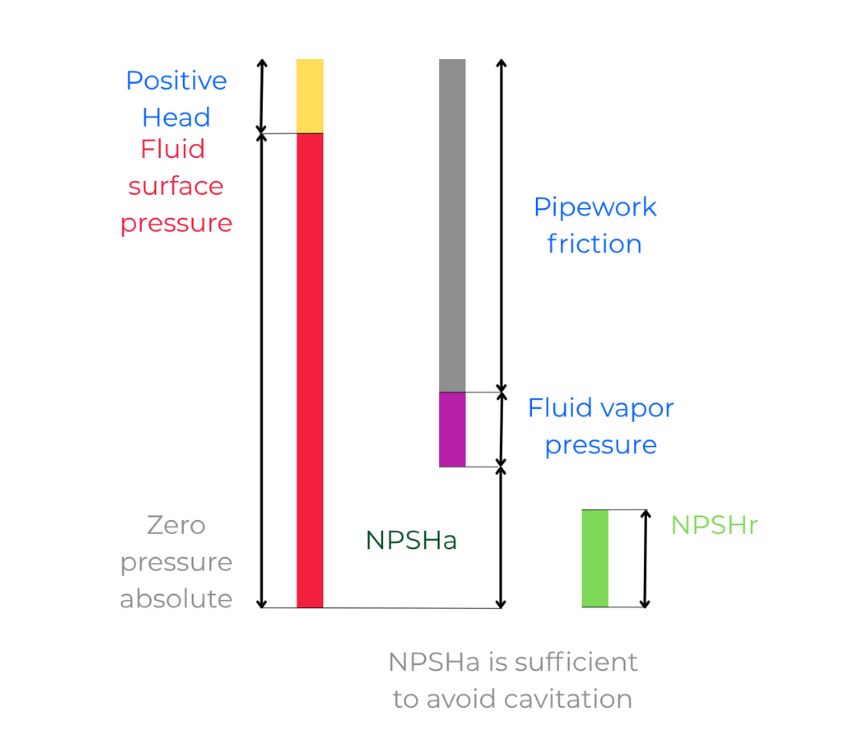
  • Available NPSH (NPSHa): This is a characteristic of the system. It represents the absolute head actually available at the pump’s suction inlet. It is determined by the geodetic head, friction head losses, and the absolute pressure acting on the surface of the liquid, vapour pressure of pumped fluid at the relevant temperature. In other words, the NPSHa depends on the plant layout and the properties of the fluid at that temperature.
  • Required NPSH (NPSHr): This is a characteristic of the pump. It is the minimum head required at the suction inlet to prevent cavitation. This value is determined by the pump’s design and is provided by the manufacturer for various flow rates.

The fundamental rule: 

NPSHa must be greater than NPSHr. The available NPSH in your system must always be greater than the NPSH required by the pump. A safety margin of at least 1 meter is recommended.

NPSH

Calculating NPSH: 

A PRACTICAL GUIDE
While pump manufacturers provide the NPSHr, system designers are responsible for calculating the system’s NPSHa. The formula for NPSHa is:

NPSHa = Hp +/- Hs – Hf – Hvp

Where:

  • Hp (Absolute pressure head): The energy derived from the pressure acting on the surface of the liquid. In vented systems, this is atmospheric pressure; in closed systems, it is the absolute pressure head within the vessel.
  • Hs (Geodetic head): The vertical distance between the liquid surface and the pump centerline. This value is positive for flooded suction and negative for suction lift.
  • Hf (Friction head loss): The energy lost due to friction as the liquid flows through the suction piping and fittings.
  • Hvp (Vapor pressure head): The liquid’s vapor pressure at the pumping temperature, converted into a liquid height.

The dangers of insufficient NPSH: Cavitation

When NPSHa drops below NPSHr, the suction pressure falls below the liquid’s vapor pressure. This causes vapor bubbles to form, which then collapse violently as they move into higher-pressure regions. This collapse creates shockwaves that cause:

  • Erosion and pitting of the impeller and pump casing.
  • Excessive noise and vibration (often described as pumping gravel).
  • A significant drop in pump performance (head and flow rate).
  • Premature failure of mechanical seals and bearings, or damage to the mag drive pump support structure.

Factors affecting NPSH 

Factors affecting NPSHa (System-dependent):

  • Liquid temperature: Higher temperatures increase vapor pressure (Hvp), reducing NPSHa.
  • Altitude/Surface pressure: Higher altitudes or vacuum in the tank reduce Hp and thus NPSHa.
  • Geodetic head: Increasing the liquid level in the supply tank increases NPSHa.
  • Piping design: Longer suction pipes and smaller diameters increase friction losses (Hf), reducing NPSHa.

Factors affecting NPSHr (Pump-dependent):

  • Pump speed: Higher pump speeds increase NPSHr.
  • Flow rate: As flow rate increases, NPSHr also increases.
  • Impeller design: Geometry significantly impacts the required value.

How to improve NPSH and prevent cavitation 

To increase NPSHa:

  1. Increase the liquid level or raise the suction tank.
  2. Lower the pump’s position relative to the liquid level.
  3. Increase the diameter of the suction piping.
  4. Minimize the length of the suction line and the number of fittings.
  5. Pressurize the suction tank (if closed).
  6. Cool the liquid to lower its vapor pressure.

To decrease NPSHr:

  1. Choose the right pump with a low NPSHr at the operating point.
  2. Use a larger, slower-turning pump.
  3. Reduce the speed using a Variable Frequency Drive (VFD).

ENGINEERING FAQ

  • Is NPSH a head or a pressure? NPSH is a head, which is a measure of energy per unit weight of fluid. The geodetic head (Hs) is strictly the elevation component of the total energy.
  • Why is using gauge pressure incorrect? Cavitation is governed by vapor pressure, an absolute fluid property. Using relative pressure ignores the energy contribution from atmospheric pressure or vessel pressurization.
  • What happens under vacuum? In vacuum systems, the Hp term is significantly reduced. To maintain NPSHa, the positive geodetic head (Hs) must be increased.
  • Why does cavitation sound like pumping gravel? The sound is produced by high-energy shockwaves resulting from thousands of vapor bubbles collapsing against the impeller at sonic speeds.
Read More
HTM series magnetic drive centrifugal pumps: the complete guide to the pump range that guarantees zero leaks and emissions

HTM series magnetic drive centrifugal pumps: the complete guide to the pump range that guarantees zero leaks and emissions

In the field of pumping corrosive and hazardous liquids, safety is not an option but an absolute necessity. Chemical fluid leaks can cause environmental damage, risks to operators, and costly downtime. The GemmeCotti HTM series was developed to meet these challenges, offering a zero-leak solution thanks to its magnetic drive design.

In this guide, we will explore how it works, its advantages, and how to choose the ideal configuration of HTM centrifugal pumps for various industrial processes.

What is magnetic drive and how does it work?

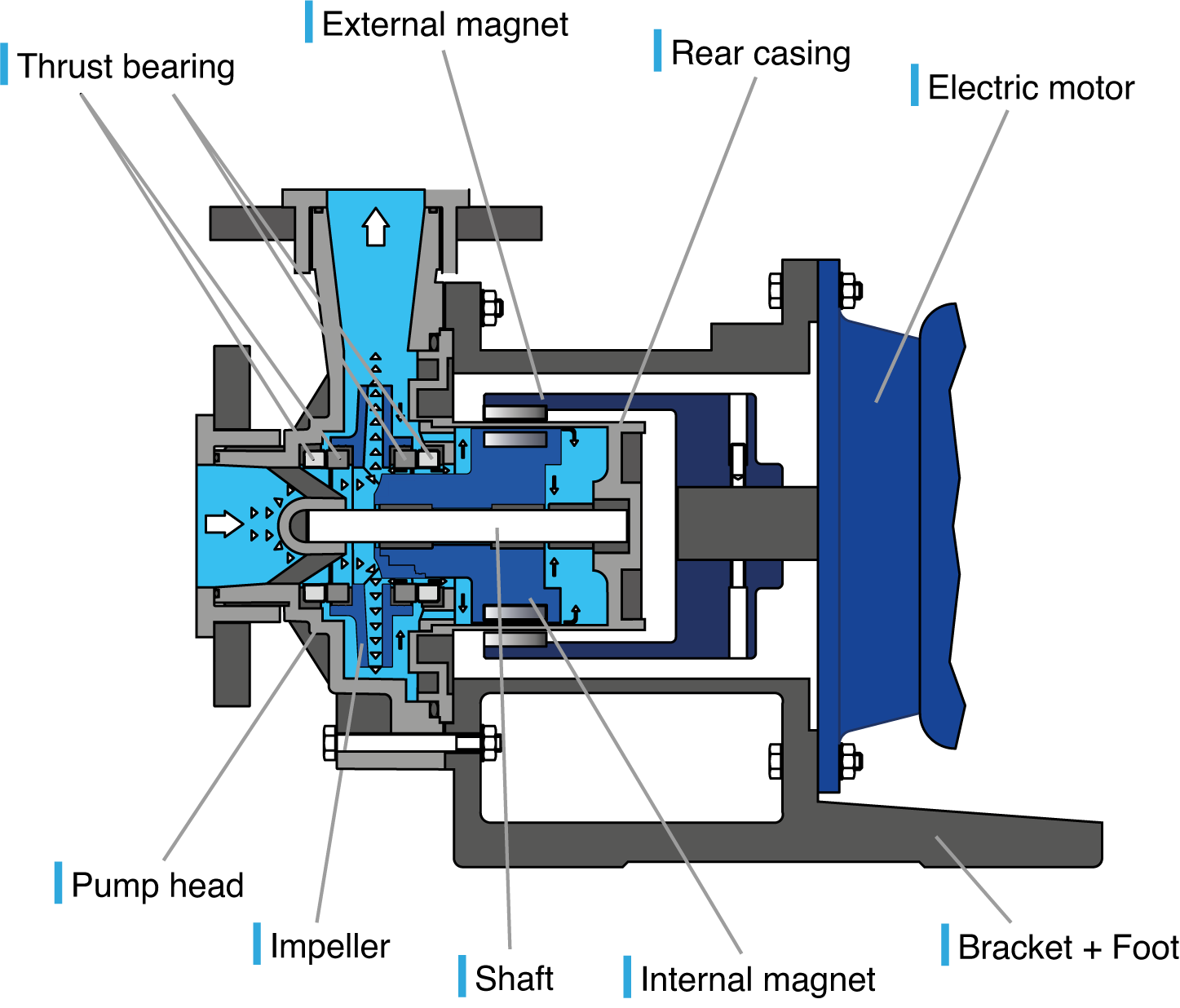
Unlike traditional pumps with mechanical seals, GemmeCotti HTM series pumps use an innovative design without a mechanical seal. In a magnetic drive pump, there are two magnetic couplings: the outer magnet, mounted on the motor shaft, and the inner magnet, which allows the impeller to rotate and move the fluid.

The two magnetic semicouplings are separated by a containment shell and never come into contact with each other; the inner magnet rotates exclusively through the magnetic field action. The liquid therefore always remains hermetically sealed within the hydraulic part of the pump. This design ensures maximum safety, greater reliability, and excellent efficiency, even in the most demanding applications.

mag drive design

For an even more detailed visual explanation, an explanatory video is available on YouTube showing the operating principle in action.

What are the advantages of HTM magnetic drive pumps?

Choosing a GemmeCotti magnetic drive pump means investing in safety, efficiency, and quality.

The advantages that distinguish these acid pumps are:

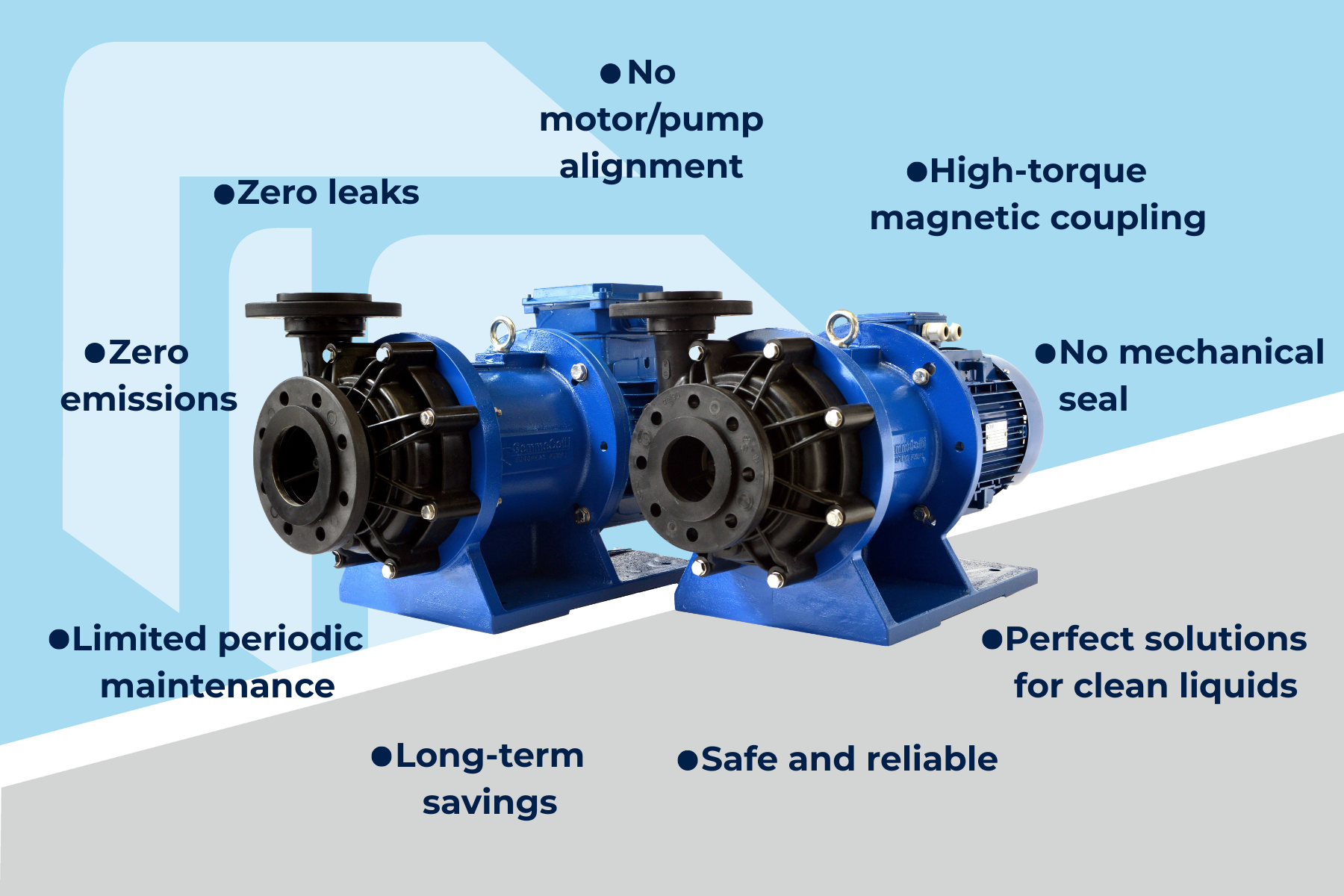
  • No leaks or emissions: ideal for handling hazardous chemicals. The liquid always remains hermetically sealed inside the hydraulic section of the pump.
  • Reduced maintenance: fewer wear components (such as mechanical seals) means lower operating costs, no plant downtime, and long-term savings.
  • No motor/pump alignment required: the compact design simplifies installation and reduces vibrations.
  • Maximum reliability: solid construction made of chemically resistant materials (PP, PVDF, AISI 316). HTM series centrifugal pumps are the ideal solution for long-lasting performance, even in heavy-duty conditions.
  • Long-term savings: pumps designed to last for decades.
  • High-torque magnetic coupling: these pumps are designed to ensure high torque of magnetic couplings.

advantages mag drive pumps

Performance and materials: a tailor-made solution for every need

Every industrial application has different requirements. For this reason, the HTM range, from size 4 to 100, offers wide operational flexibility.

Technical specifications

  • Flow rate: From 0.5 to 130 m³/h (2–528 USGPM)
  • Head: Up to 48 meters (148 ft)

Chemical compatibility

The choice of material in contact with the liquid is essential for pump durability:

  • PP (Polypropylene): Excellent for many liquids such as phosphoric acid, ammonia, and caustic soda.
  • PVDF (Polyvinylidene Fluoride): Ideal for aggressive acids such as sulfuric acid, hydrofluoric acid, sodium hypochlorite, and many others.
  • AISI 316: Stainless steel suitable for fluids such as diesel, acetone, ethyl alcohol, hydraulic oils, and many others.

In addition to thermoplastic versions, HTM pumps can also be manufactured in AISI 316 stainless steel. This configuration is particularly suitable for demanding industrial applications requiring high mechanical and thermal resistance. The robustness of steel, combined with the safety of magnetic drive technology, makes these pumps the ideal choice for transferring hydrocarbons and solvents with total absence of leaks.

Technical specifications (AISI 316 Version)

  • Flow rate: From 0.8 to 32 m³/h (3–175 USGPM)
  • Head: Up to 24 meters (110 ft)

Discover the complete range and specifications of HTM magnetic centrifugal pumps in AISI 316.

HTM SERIES

For explosive environments, ATEX Zone 1 and 2 versions are also available (Models EM-C PP/PVDF and EM-C AISI 316).

The GemmeCotti team is available to help customers select the pump best suited to their application.

Contact us at info@gemmecotti.com for a free quotation.

FAQ

What is the best pump for transferring acids?

Magnetic drive pumps are the ideal solution for transferring acids, bases, hazardous liquids, flammable liquids, corrosive fluids, and solvents. Thanks to the magnetic drive design, the absence of leaks and emissions into the environment is guaranteed. It is the best way to reduce environmental impact and ensure maximum safety while complying with the strictest regulations.


When should a magnetic drive pump be preferred over a mechanical seal pump?

A magnetic drive pump is preferable when handling hazardous, corrosive, or expensive fluids without solids, as it eliminates the risk of leaks and atmospheric emissions typical of mechanical seal pumps subject to wear.

What maintenance is required for the HTM series?

Thanks to its simplified design, maintenance is periodic and limited. It is recommended to periodically monitor the condition of the bushings and the integrity of the O-rings to ensure maximum efficiency. The inspection interval strongly depends on operating conditions, fluid characteristics, temperature, materials used, and, naturally, operating time.

Are GemmeCotti pumps suitable for liquids with suspended solids?

HTM series pumps are perfect solutions for clean liquids. In the presence of solids, filtration systems or specific configurations must be evaluated to prevent solid particles from entering the pump. If the solids percentage exceeds 2%, it is possible to use a mechanical seal pump from the HCO series.

Can HTM series pumps run dry?

Standard magnetic drive centrifugal pumps are not designed for prolonged dry running, as the liquid also acts as a lubricant for the internal bushings and shaft. The use of automatic shut-off devices or the constant presence of an operator able to promptly stop the pump is recommended. GemmeCotti offers solutions to prevent this risk, such as dry-run protection devices that allow the pump to operate in complete safety.

Read More
Chemical pumps for aquariums

Industrial pumps for big aquariums: the complete guide for freshwater and seawater applications

The pumping system of large aquariums is the invisible heart that keeps these complex ecosystems alive. Whether for freshwater or seawater tanks, selecting the right industrial pump is critical to ensure water quality, animal safety, and system reliability.

Why is the pumping system crucial for large aquariums?

The survival of aquatic species in exhibition tanks relies entirely on an efficient pumping system. In large aquariums, pumps are responsible for continuous water circulation and filtration, which are essential to mimic the natural habitat of rivers, lakes, and oceans. The pump directs the liquid through filtration units to remove waste and maintain the water’s chemical and physical properties before returning it to the tank. Without a reliable pump, oxygen levels would drop, and toxic waste would accumulate, endangering the aquatic life.

What are the key requirements for an industrial aquarium pump?

Pumps used in freshwater and saltwater aquariums must meet three specific criteria: corrosion resistance, reliable and continuous functioning, and silent operation.


  1. Corrosion resistance: Especially for seawater applications, the pump must withstand the aggressive nature of salt and brine without deteriorating.
  2. Guarantee of a reliable and continuous functioning: pumps in aquariums cannot stop. That’s why choosing a high-quality pump is crucial for the life of the sea animals.
  3. Silent operation: Excessive vibration or noise can create stressful environments for sensitive fish, altering their natural behavior. Therefore, “quiet industrial pumps” are a top priority for these installations.

Which material is best for saltwater aquarium pumps?

Thermoplastic materials are the superior choice for pumping saltwater. Unlike metallic pumps, which are prone to corrosion and can release dangerous metal particles into the water, thermoplastics are chemically inert. GemmeCotti recommends Polypropylene (PP) for these applications. It is a solid, lightweight polymer with excellent thermal and mechanical resistance. Using a PP pump ensures that no metallic contamination harms the health of the sea fauna, making it the safest option for marine environments.

What is the best type of pump to choose for big aquariums?

Centrifugal pumps are the industry standard for large freshwater and seawater aquariums due to their efficiency in moving fluids at high flow rates. Specifically, magnetic drive centrifugal pumps are the optimal solution. A mag drive pump uses a magnetic coupling to transmit power from the motor to the impeller, eliminating the need for a mechanical seal. This design is crucial because mechanical seals are the most common point of failure and leakage in standard pumps. 

Magnetic drive design is widely recognized as one of the safest and most reliable solutions for large aquarium pumping systems. Thanks to the magnetic coupling between the motor and the impeller, these pumps operate without mechanical seals, preventing leakage and ensuring maximum protection for both aquatic life and surrounding equipment.

Among the most common options, centrifugal pumps remain the industry standard for big freshwater and seawater aquariums due to their ability to handle high flow rates efficiently. Magnetic drive centrifugal pumps are especially suitable for continuous filtration and circulation, providing smooth and consistent water movement with minimal maintenance.

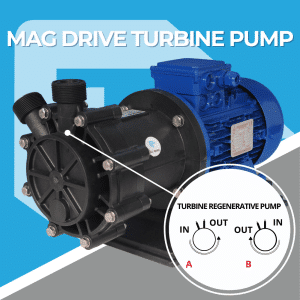
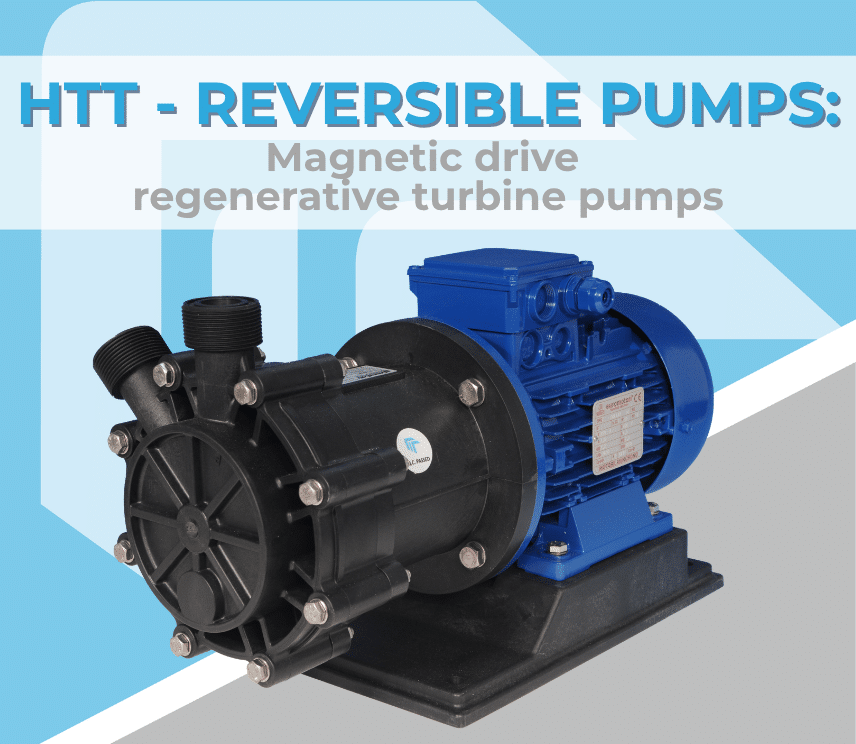
In certain applications, mag drive turbine pumps can also be considered. These pumps are designed to deliver higher pressure compared to standard centrifugal models, making them a good choice when the system requires stronger water pushing capability through complex filtration or piping networks. GemmeCotti mag drive turbine pump model HTT is recommended when the system requires a lower flow rate but significantly higher head, for example when water must be pumped over longer distances or through high-resistance circuits

Self-priming mag drive centrifugal pump, model HTM SP, should be selected whenever there is a need to install the pump in an above-the-liquid-level configuration (above the tank or sump), ensuring proper suction performance in flooded or non-flooded installations.

industrial pumps for acquariums

Why are magnetic drive pumps preferred for aquariums?

Mag drive pumps offer a sealless design that guarantees zero leakage and total containment of the fluid. This is vital for two reasons:

  • Safety: There is no risk of water leaking into the plant room or chemicals leaking out.
  • Low maintenance: Without mechanical seals to wear out, these pumps require significantly less maintenance than traditional sealed pumps. GemmeCotti’s HTM series (PP/PVDF) is particularly effective. The magnetic design, combined with anticorrosive thermoplastic construction, ensures high chemical resistance and reliability. Models like the HTM 6, HTM 10, HTM 15 and HTM 31 are the most frequently used pump sizes for maintaining efficient, secure, and clean aquatic life support systems.

FAQ

Can I use the same pump for freshwater and seawater?
Yes, provided the pump is made of corrosion-resistant materials like Polypropylene (PP). GemmeCotti mag drive pumps in PP are suitable for both freshwater and seawater, offering versatility for different tank types.

Are magnetic drive pumps quieter than standard pumps?
Generally, yes. Magnetic drive pumps have fewer moving parts and no mechanical seal friction, which often results in smoother and quieter operation—a critical factor for avoiding stress to aquatic animals.

How often do industrial aquarium pumps need maintenance?
Mag drive pumps require very little maintenance compared to sealed pumps because they lack mechanical seals (a part that is subject to wear). Periodic inspections of the bearings are recommended to ensure that debris hasn’t entered the pump wearing this component.

Can aquarium pumps be used for other applications?

Yes. Industrial magnetic drive pumps designed for aquariums can also be used in many other marine and water-handling applications. They are widely installed on boats and yachts, especially for saltwater circulation systems, thanks to their corrosion-resistant thermoplastic construction.
They are also suitable for use in desalination units and water treatment systems, where reliability and leak-free operation are essential.

Read More
HCO - mechanical seal centrifugal pumps

HCO Mechanical Seal Pumps with semi-open Impeller: when to use them and how to choose the best seal type

Mechanical seal pumps with a semi-open impeller, such as the HCO type, are generally used for pumping acids and hazardous liquids when solids are present in the fluid, making it impossible to use magnetic drive pumps.
Their semi-open impeller design allows the safe transfer of corrosive liquids even when particulate matter is present.

The mechanical seal in these pumps consists of a stationary ring and a rotating ring mounted on the pump shaft, which is directly coupled to the motor shaft. The two contact surfaces must be lubricated, and this occurs through the pumped liquid itself.

Choosing the right mechanical seal for a centrifugal pump is essential to ensure safety, reliability, and long operational life, especially when pumping corrosive and aggressive liquids.

The GemmeCotti HCO centrifugal pump series, made of PP or PVDF, is available with different mechanical seal configurations designed to meet a wide range of industrial applications and operating conditions.

What seal types are available on HCO pumps?

The GemmeCotti HCO centrifugal pump range offers several sealing solutions, selected according to pump size, operating conditions, and the type of processed fluid. The main seal types available are:

  • Elastomer Lip Seal – used on models HCO 95-10. This is a very simple and cost-effective solution for less demanding chemical applications with reduced performance.
  • Single internal mechanical seal with PTFE bellows – adopted on models HCO 110-170. It combines high chemical resistance with excellent reliability thanks to PTFE bellows and the materials used for the seal faces (Standard: SiC / Ceramic; available on request: Graphite / Ceramic).

HCO 110-170 single mechanical seal

  • Single internal mechanical seal with PTFE bellows, available on models HCO 180-200. Generally supplied in SiC / Ceramic, ideal for pumping acids and corrosive liquids under standard operating conditions with a maximum solids content of 3% and particle sizes not exceeding 5 mm. It allows high flow rates up to 130 m³/h.
  • HCO 180-200 single mechanical seal
  • Double back-to-back mechanical seal – available on models HCO 180-200 for more critical applications. This seal guarantees the highest safety level thanks to a dual sealing system with barrier fluid. It is recommended for dangerous or aggressive fluids, maintaining the same high capacity (up to 130 m³/h) even under severe operating conditions.

double mechanical seal


🔗 Discover all HCO versions and available seals

What is a single mechanical seal and when should it be used?

A single mechanical seal consists of one sealing interface between the rotating shaft and the pump casing. It is the most common solution in centrifugal pumps for standard chemical applications.

In GemmeCotti HCO pumps from size 110 to 170, the single seal can be supplied in different materials depending on the pumped fluid. The standard version includes stationary and rotating rings in SiC / Al₂O₃, while an alternative stationary graphite ring is available on request.

On models HCO 180 and HCO 200, the seal rings are made of Silicon Carbide / Ceramic, ensuring good wear resistance, operational reliability, and an optimal balance between performance and cost.

Single mechanical seals are particularly suitable when the pumped fluid is not highly hazardous and when operating conditions (pressure, temperature, chemical composition) remain within standard parameters. In such cases, they provide high performance with a simple, economical, and maintenance-friendly design.

Advantages of a single mechanical seal

  • Simple and compact design
  • Lower initial investment compared to double seals
  • Reduced maintenance needs thanks to fewer components
  • Reliable pumping of acids and corrosive liquids under standard conditions

Typical applications

  • Transfer of chemicals in industrial plants
  • Water and chemical wastewater treatment
  • Standard chemical processes where extra safety is not required

When handling highly dangerous, abrasive fluids or particularly critical applications, a double mechanical seal is recommended for higher safety.

What is a double mechanical seal and why is it suitable for critical applications?

A double back-to-back mechanical seal consists of two seal faces mounted opposite each other inside the seal chamber, with an interposed barrier fluid that ensures proper lubrication and heat dissipation.

This configuration offers a higher safety level and is the preferred solution for heavy-duty and critical applications where a single seal is not sufficient to contain the pumped fluid.

To ensure correct operation, an external flushing system must be provided to supply and circulate the barrier fluid at the required pressure.

On GemmeCotti HCO centrifugal pumps, the back-to-back double seal is particularly suitable for pumping dangerous, corrosive fluids or liquids containing suspended solids up to 5% with particle sizes under 5 mm, as well as abrasive particles, while maintaining high performance and long-term reliability.

Advantages of a double mechanical seal

  • Greater safety: significantly reduced risk of leakage, especially with hazardous or toxic fluids
  • Environmental protection: better containment and prevention of contamination
  • Longer service life: two seals reduce stress on each face, extending durability and lowering maintenance frequency
  • Reliability in severe conditions: ideal for abrasive fluids, high temperatures, and demanding operating conditions

The choice depends on the liquid type, operating conditions, temperature, and plant safety requirements.

Mechanical seal centrifugal pumps

What materials are used in HCO centrifugal pumps with a mechanical seal?

All GemmeCotti HCO centrifugal pumps are made of high-performance thermoplastics, ideal for the chemical industry:

  • PP (Polypropylene) – excellent chemical resistance, max temperature about 70 °C
  • PVDF (Polyvinylidene Fluoride) – superior chemical resistance, max temperature about 90 °C

These materials ensure maximum corrosion resistance, long service life, and reliability.

How to choose the most suitable mechanical seal for an HCO pump

When selecting the right mechanical seal, it is important to evaluate:

  • Chemical characteristics of the pumped fluid
  • Hazard and toxicity level
  • Operating temperature and pressure
  • Required safety level
  • Maintenance strategy of the plant

For standard chemical services, a single mechanical seal is often sufficient.
For dangerous or critical applications, a double mechanical seal is strongly recommended.

Is the pumped liquid clean? Magnetic drive pumps are the ideal solution to guarantee zero leakage and emissions into the environment, with extremely low maintenance. Learn more about the advantages of magnetic drive technology.

 For technical support and advice, contact the GemmeCotti team: info@gemmecotti.com

FAQ

1. What is the difference between a single and double mechanical seal?

A single mechanical seal uses one sealing face and is typically used in standard chemical applications where the fluid is not highly dangerous and operating conditions are stable.

A double back-to-back mechanical seal uses two sealing faces with a barrier fluid in between, ensuring higher safety. It is recommended when minimizing leakage risk is crucial, especially with toxic, dangerous, or highly aggressive fluids.

2. Are HCO mechanical seal pumps suitable for corrosive liquids?

Yes. GemmeCotti HCO centrifugal pumps are specifically designed for pumping acids and corrosive liquids.
They are made in PP or PVDF, high-performance thermoplastics that guarantee excellent chemical resistance and long operational life even in harsh industrial environments. Seal and gasket materials are selected according to the pumped liquid, temperature, and operating conditions.

3. Which seal is recommended for hazardous fluids?

For hazardous, toxic, or environmentally harmful fluids, a double back-to-back mechanical seal is strongly recommended.
It provides extra protection through the barrier fluid, reducing leakage risk and improving safety for both the plant and operators.

4. What is the maximum flow rate of HCO pumps with a mechanical seal?

GemmeCotti HCO mechanical seal pumps can cover flow rates from 0.5 m³/h up to 130 m³/h, with a maximum head of 48 meters.
The wide range available ensures the best solution for every application.

5. Can I get support in choosing the right seal?

Yes. GemmeCotti provides specialized technical support to help customers select the most suitable seal configuration.
The choice is based on the pumped fluid, operating conditions, safety requirements, and maintenance needs to guarantee the most efficient and reliable solution.

Contact GemmeCotti technical support: info@gemmecotti.com

6. Is a magnetic drive pump or a mechanical seal pump better?

The choice depends on the fluid characteristics and operating conditions.

  • Magnetic drive pumps are ideal for clean fluids without solids, when zero leakage and minimal maintenance are required.
  • Mechanical seal pumps, such as the GemmeCotti HCO series, are preferable when the fluid contains suspended solids or abrasive particles, or when high flow rates and more demanding operating conditions are needed.
Read More
GemmeCotti Instagram

GEMMECOTTI IS ON INSTAGRAM!

We are pleased to announce the launch of our new official Instagram profile, @gemmecotti, which offers customers and industry professionals a closer look at our industrial pumps and magnetic drive technology.

We have decided to use this new channel to showcase what has always defined our company: build quality and technological innovation. The new channel will be a dynamic showcase dedicated entirely to our production.

What will you find on our profile?

GemmeCotti instagram profile

  • Our products in the spotlight: we will offer you a unique perspective on our products, showcasing the build quality and technological innovation that characterize them. We will highlight the reliability of the materials we use (PP-PVDF-AISI 316), which are designed to ensure maximum performance and safety.
  • The value of GemmeCotti service: it’s about more than just products. We will share our team’s commitment to offering comprehensive support services, from technical consulting to after-sales support.
  • Beyond the product: we will share the vision and principles that guide our business decisions. From our constant pursuit of quality to our focus on sustainable development, this core value is reflected in our production choices and the efficiency of our solutions.

Join our community, follow us on Instagram: @gemmecotti

You can also find us on:

Read More
Newsletter