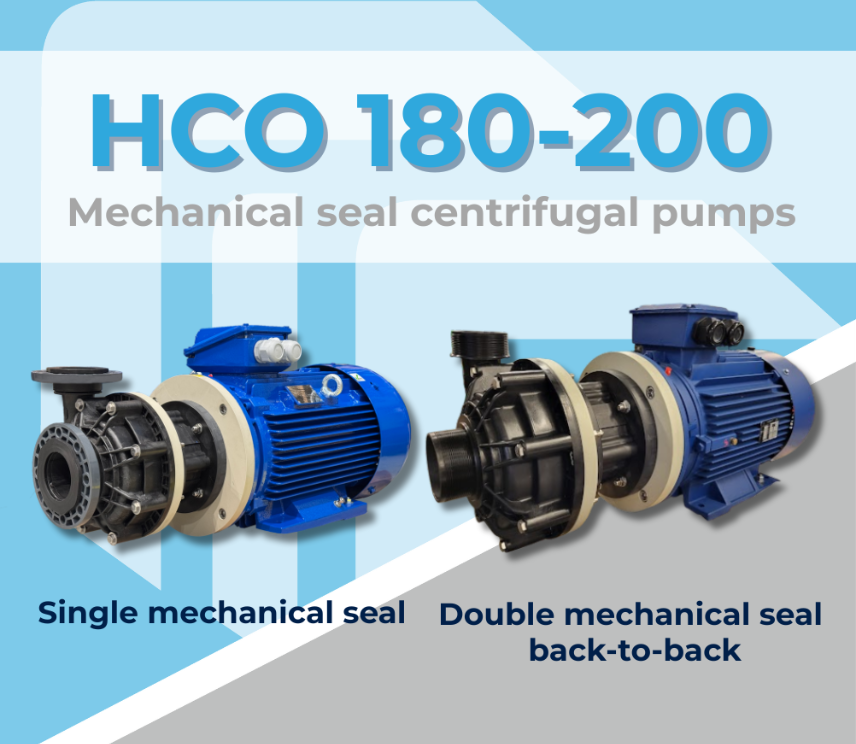
HCO - mechanical seal centrifugal pumps

HCO Mechanical Seal Pumps with semi-open Impeller: when to use them and how to choose the best seal type

Mechanical seal pumps with a semi-open impeller, such as the HCO type, are generally used for pumping acids and hazardous liquids when solids are present in the fluid, making it impossible to use magnetic drive pumps.
Their semi-open impeller design allows the safe transfer of corrosive liquids even when particulate matter is present.

The mechanical seal in these pumps consists of a stationary ring and a rotating ring mounted on the pump shaft, which is directly coupled to the motor shaft. The two contact surfaces must be lubricated, and this occurs through the pumped liquid itself.

Choosing the right mechanical seal for a centrifugal pump is essential to ensure safety, reliability, and long operational life, especially when pumping corrosive and aggressive liquids.

The GemmeCotti HCO centrifugal pump series, made of PP or PVDF, is available with different mechanical seal configurations designed to meet a wide range of industrial applications and operating conditions.

What seal types are available on HCO pumps?

The GemmeCotti HCO centrifugal pump range offers several sealing solutions, selected according to pump size, operating conditions, and the type of processed fluid. The main seal types available are:

  • Elastomer Lip Seal – used on models HCO 95-10. This is a very simple and cost-effective solution for less demanding chemical applications with reduced performance.
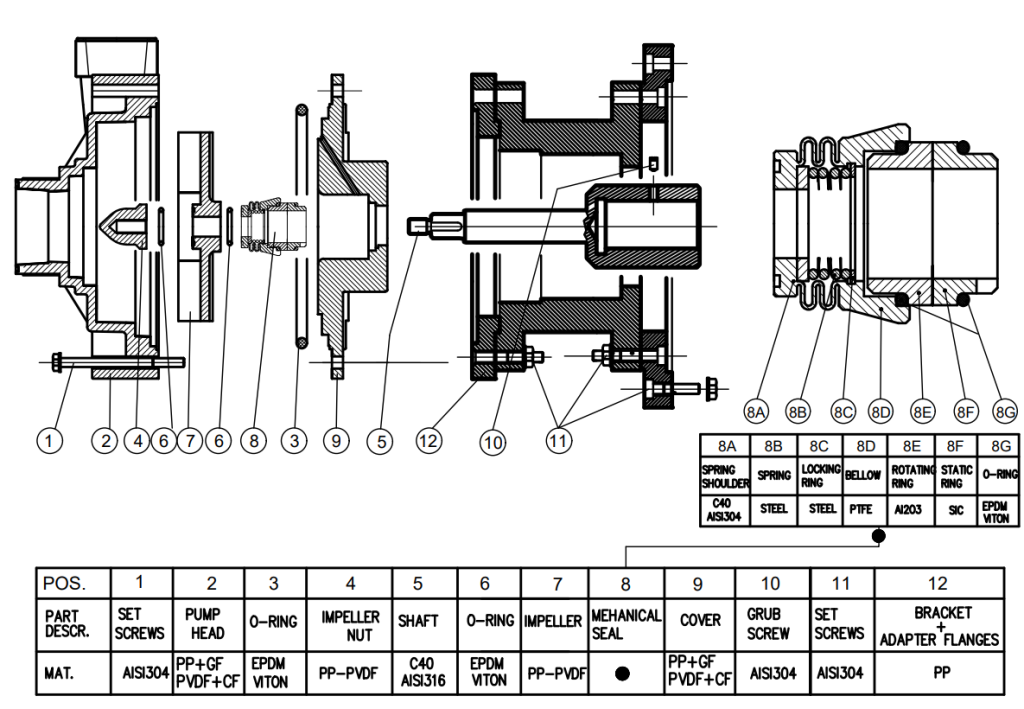
  • Single internal mechanical seal with PTFE bellows – adopted on models HCO 110-170. It combines high chemical resistance with excellent reliability thanks to PTFE bellows and the materials used for the seal faces (Standard: SiC / Ceramic; available on request: Graphite / Ceramic).
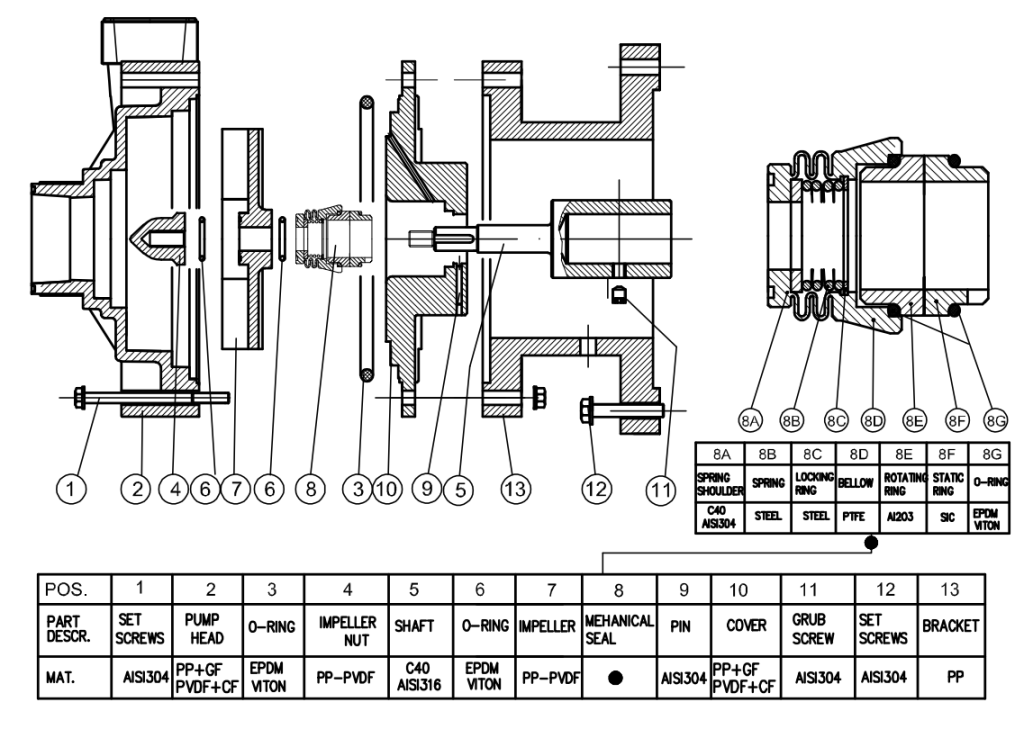
HCO 110-170 single mechanical seal

  • Single internal mechanical seal with PTFE bellows, available on models HCO 180-200. Generally supplied in SiC / Ceramic, ideal for pumping acids and corrosive liquids under standard operating conditions with a maximum solids content of 3% and particle sizes not exceeding 5 mm. It allows high flow rates up to 130 m³/h.
  • HCO 180-200 single mechanical seal
  • Double back-to-back mechanical seal – available on models HCO 180-200 for more critical applications. This seal guarantees the highest safety level thanks to a dual sealing system with barrier fluid. It is recommended for dangerous or aggressive fluids, maintaining the same high capacity (up to 130 m³/h) even under severe operating conditions.
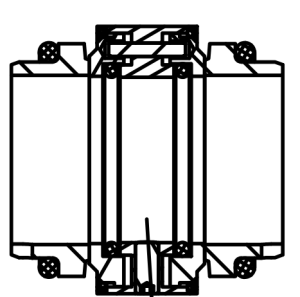
double mechanical seal


🔗 Discover all HCO versions and available seals

What is a single mechanical seal and when should it be used?

A single mechanical seal consists of one sealing interface between the rotating shaft and the pump casing. It is the most common solution in centrifugal pumps for standard chemical applications.

In GemmeCotti HCO pumps from size 110 to 170, the single seal can be supplied in different materials depending on the pumped fluid. The standard version includes stationary and rotating rings in SiC / Al₂O₃, while an alternative stationary graphite ring is available on request.

On models HCO 180 and HCO 200, the seal rings are made of Silicon Carbide / Ceramic, ensuring good wear resistance, operational reliability, and an optimal balance between performance and cost.

Single mechanical seals are particularly suitable when the pumped fluid is not highly hazardous and when operating conditions (pressure, temperature, chemical composition) remain within standard parameters. In such cases, they provide high performance with a simple, economical, and maintenance-friendly design.

Advantages of a single mechanical seal

  • Simple and compact design
  • Lower initial investment compared to double seals
  • Reduced maintenance needs thanks to fewer components
  • Reliable pumping of acids and corrosive liquids under standard conditions

Typical applications

  • Transfer of chemicals in industrial plants
  • Water and chemical wastewater treatment
  • Standard chemical processes where extra safety is not required

When handling highly dangerous, abrasive fluids or particularly critical applications, a double mechanical seal is recommended for higher safety.

What is a double mechanical seal and why is it suitable for critical applications?

A double back-to-back mechanical seal consists of two seal faces mounted opposite each other inside the seal chamber, with an interposed barrier fluid that ensures proper lubrication and heat dissipation.

This configuration offers a higher safety level and is the preferred solution for heavy-duty and critical applications where a single seal is not sufficient to contain the pumped fluid.

To ensure correct operation, an external flushing system must be provided to supply and circulate the barrier fluid at the required pressure.

On GemmeCotti HCO centrifugal pumps, the back-to-back double seal is particularly suitable for pumping dangerous, corrosive fluids or liquids containing suspended solids up to 5% with particle sizes under 5 mm, as well as abrasive particles, while maintaining high performance and long-term reliability.

Advantages of a double mechanical seal

  • Greater safety: significantly reduced risk of leakage, especially with hazardous or toxic fluids
  • Environmental protection: better containment and prevention of contamination
  • Longer service life: two seals reduce stress on each face, extending durability and lowering maintenance frequency
  • Reliability in severe conditions: ideal for abrasive fluids, high temperatures, and demanding operating conditions

The choice depends on the liquid type, operating conditions, temperature, and plant safety requirements.
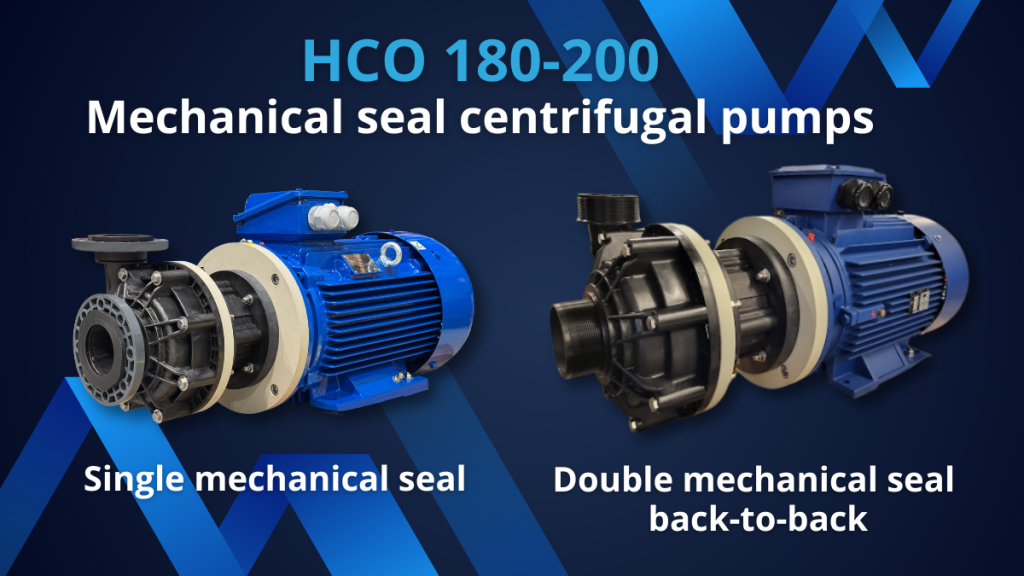
Mechanical seal centrifugal pumps

What materials are used in HCO centrifugal pumps with a mechanical seal?

All GemmeCotti HCO centrifugal pumps are made of high-performance thermoplastics, ideal for the chemical industry:

  • PP (Polypropylene) – excellent chemical resistance, max temperature about 70 °C
  • PVDF (Polyvinylidene Fluoride) – superior chemical resistance, max temperature about 90 °C

These materials ensure maximum corrosion resistance, long service life, and reliability.

How to choose the most suitable mechanical seal for an HCO pump

When selecting the right mechanical seal, it is important to evaluate:

  • Chemical characteristics of the pumped fluid
  • Hazard and toxicity level
  • Operating temperature and pressure
  • Required safety level
  • Maintenance strategy of the plant

For standard chemical services, a single mechanical seal is often sufficient.
For dangerous or critical applications, a double mechanical seal is strongly recommended.

Is the pumped liquid clean? Magnetic drive pumps are the ideal solution to guarantee zero leakage and emissions into the environment, with extremely low maintenance. Learn more about the advantages of magnetic drive technology.

 For technical support and advice, contact the GemmeCotti team: info@gemmecotti.com

FAQ

1. What is the difference between a single and double mechanical seal?

A single mechanical seal uses one sealing face and is typically used in standard chemical applications where the fluid is not highly dangerous and operating conditions are stable.

A double back-to-back mechanical seal uses two sealing faces with a barrier fluid in between, ensuring higher safety. It is recommended when minimizing leakage risk is crucial, especially with toxic, dangerous, or highly aggressive fluids.

2. Are HCO mechanical seal pumps suitable for corrosive liquids?

Yes. GemmeCotti HCO centrifugal pumps are specifically designed for pumping acids and corrosive liquids.
They are made in PP or PVDF, high-performance thermoplastics that guarantee excellent chemical resistance and long operational life even in harsh industrial environments. Seal and gasket materials are selected according to the pumped liquid, temperature, and operating conditions.

3. Which seal is recommended for hazardous fluids?

For hazardous, toxic, or environmentally harmful fluids, a double back-to-back mechanical seal is strongly recommended.
It provides extra protection through the barrier fluid, reducing leakage risk and improving safety for both the plant and operators.

4. What is the maximum flow rate of HCO pumps with a mechanical seal?

GemmeCotti HCO mechanical seal pumps can cover flow rates from 0.5 m³/h up to 130 m³/h, with a maximum head of 48 meters.
The wide range available ensures the best solution for every application.

5. Can I get support in choosing the right seal?

Yes. GemmeCotti provides specialized technical support to help customers select the most suitable seal configuration.
The choice is based on the pumped fluid, operating conditions, safety requirements, and maintenance needs to guarantee the most efficient and reliable solution.

Contact GemmeCotti technical support: info@gemmecotti.com

6. Is a magnetic drive pump or a mechanical seal pump better?

The choice depends on the fluid characteristics and operating conditions.

  • Magnetic drive pumps are ideal for clean fluids without solids, when zero leakage and minimal maintenance are required.
  • Mechanical seal pumps, such as the GemmeCotti HCO series, are preferable when the fluid contains suspended solids or abrasive particles, or when high flow rates and more demanding operating conditions are needed.
Read More
GemmeCotti Instagram

GEMMECOTTI IS ON INSTAGRAM!

We are pleased to announce the launch of our new official Instagram profile, @gemmecotti, which offers customers and industry professionals a closer look at our industrial pumps and magnetic drive technology.

We have decided to use this new channel to showcase what has always defined our company: build quality and technological innovation. The new channel will be a dynamic showcase dedicated entirely to our production.

What will you find on our profile?

GemmeCotti instagram profile

  • Our products in the spotlight: we will offer you a unique perspective on our products, showcasing the build quality and technological innovation that characterize them. We will highlight the reliability of the materials we use (PP-PVDF-AISI 316), which are designed to ensure maximum performance and safety.
  • The value of GemmeCotti service: it’s about more than just products. We will share our team’s commitment to offering comprehensive support services, from technical consulting to after-sales support.
  • Beyond the product: we will share the vision and principles that guide our business decisions. From our constant pursuit of quality to our focus on sustainable development, this core value is reflected in our production choices and the efficiency of our solutions.

Join our community, follow us on Instagram: @gemmecotti

You can also find us on:

Read More
winter holidays 2025-2026

WINTER HOLIDAYS 2025/2026

With the holiday season just around the corner, we want to inform you that our team will remain available to assist you with quotations and technical support throughout the period.

Our offices and workshop will be closed only on the following days:

  • December 2025: 8th, 25th and 26th
  • January 2026: 1st, 2nd, and 6th

Please organize your orders accordingly.

We wish you a wonderful holiday season and a happy New Year!

GemmeCotti chemical pumps

Read More
how to select a pump - parameters

Pump selection guide: all the parameters

Selecting an industrial pump for acids is a critical engineering decision that goes far beyond simply transporting fluids. A meticulous selection process is essential to ensure operational reliability, process efficiency, system longevity, and, above all, safety. Choosing the wrong pump can lead to premature failures, costly downtime, inefficient energy consumption, and potentially hazardous situations. This guide provides an analysis of the essential technical parameters to consider when selecting the most suitable pump for your needs.

Part 1: fluid characteristics

The fluid itself dictates most of the pump selection criteria. Its physical and chemical properties will determine the appropriate materials of construction, the type of pump required, and the power needed to move it.

1.1 Chemical composition and corrosivity

The first step is to identify every chemical component of the fluid. This analysis is crucial for selecting materials that can withstand corrosion, degradation, and chemical attacks.

  • Materials of construction: The choice between metals (e.g., Stainless Steel 316), thermoplastics (e.g., PP, PVDF), and elastomers (e.g., EPDM, FKM, FFKM) depends entirely on chemical compatibility.
  • Purity requirements: Applications in sectors such as pharmaceuticals or food may require specific materials (e.g., FDA-compliant) to prevent fluid contamination.

GemmeCotti specializes in this field, offering a wide range of pumps for acids and hazardous liquids made from thermoplastic (PP and PVDF) and metallic (Stainless Steel 316) materials. To select the right material for the pump, GemmeCotti technicians rely on over 30 years of know-how in the chemical pump field and compatibility charts from authoritative sources. To get an idea of material compatibility with the most common liquids, you can refer to the chemical compatibility guide.

1.2 Fluid viscosity

Viscosity is a measure of a fluid’s resistance to flow. It is one of the most critical parameters affecting pump selection and performance.

  • Centrifugal pumps: These are highly efficient for low-viscosity fluids (e.g., water, solvents). However, as viscosity increases, their efficiency drops sharply, and the required motor power rises drastically. Generally, they are not suitable for viscosities above 200 cSt.
  • Positive displacement pumps: These are the preferred choice for viscous liquids (e.g., oils, resins, syrups). They effectively handle higher viscosities, and their flow rate is less affected by viscosity changes.
  • Turbine pumps: This type of pump provides a higher head than centrifugal pumps but can only handle low-viscosity liquids (max 45 cPs).

1.3 Fluid temperature

Temperature affects several parameters:

  • Vapor pressure: Higher temperatures increase a liquid’s vapor pressure, which directly reduces the available NPSH (NPSHa). This increases the risk of cavitation.
  • Viscosity: The viscosity of most liquids decreases as temperature increases.
  • Material limits: Every material has a maximum operating temperature. Exceeding this limit can lead to mechanical failure.

1.4 Specific gravity (SG)

Specific gravity is the ratio of a fluid’s density to the density of water. It does not affect the head a centrifugal pump can produce (expressed in meters), but it directly impacts the pressure generated and the power required.

  • Pressure calculation: Pressure (bar) = (Head (m) * SG) / 10.2
  • Power calculation: The power required by the motor is directly proportional to the fluid’s specific gravity. A fluid with an SG of 1.5 will require 50% more power to be pumped than water, given the same flow rate and head.

GemmeCotti pumps are designed to accommodate different motor powers for the same pump size, allowing them to operate without issues of absorbed power even with high specific gravity liquids.

1.5 Presence and nature of solids

If the fluid contains suspended solids, it is necessary to define:

  • Concentration: The percentage of solids by weight.
  • Particle size, hardness, and shape: Abrasive solids (like sand or metal fines) require hardened materials and specialized pump designs (e.g., slurry pumps with vortex impellers or thick rubber linings) to resist wear. Soft or stringy solids can clog standard impellers, requiring a design specific to the application.

Part 2: System hydraulics – defining the workload

Once the fluid is understood, the next step is to define the system’s hydraulic requirements.

2.1 Required flow rate

This is the volume of fluid that needs to be moved in a given period, typically measured in m³/h, GPM (gallons per minute), or l/s. It is determined by the process needs.

2.2 Head and pressure

To move the fluid through the system, the pump must supply it with energy. This energy is commonly expressed as head. Head is the height to which the pump can push the fluid and is measured in meters of liquid column (m.l.c.) or simply in meters (m).

A fundamental aspect of head is that it is independent of the fluid type: the same pump will lift different liquids, even with different specific gravities, to the same height.

Pressure, on the other hand, is strictly dependent on the fluid’s density. At the same height (head), a column of liquid will exert a different force depending on its specific gravity. Consequently, a pump that generates a certain head will produce different pressures depending on the liquid it is pumping. For example, the pressure generated when pumping water will be different from that generated when pumping oil at the same head.

2.3 Net Positive Suction Head (NPSH)

As detailed in our previous article, a rigorous NPSH analysis is mandatory. You must ensure that your system’s NPSH available (NPSHa) is always greater than the pump’s NPSH required (NPSHr) to prevent destructive cavitation.

To further explore the difference between these two concepts, we have written a dedicated article on this topic: Pump Pressure vs. Head.

Part 3: Environmental and operational factors

The final set of parameters concerns the pump’s installation environment and intended use.

3.1 Installation area (ATEX)

For hazardous environments where flammable gases, vapors, or dust may be present, a pump certified for that specific ATEX zone is legally required to prevent ignition.

3.2 Environmental conditions

  • Temperature and humidity: High ambient temperatures can affect motor cooling and performance. High humidity can lead to corrosion or problems with electronics.
  • Altitude: At higher altitudes, the lower air density reduces the cooling effectiveness of standard fan-cooled motors, often requiring a motor derating.

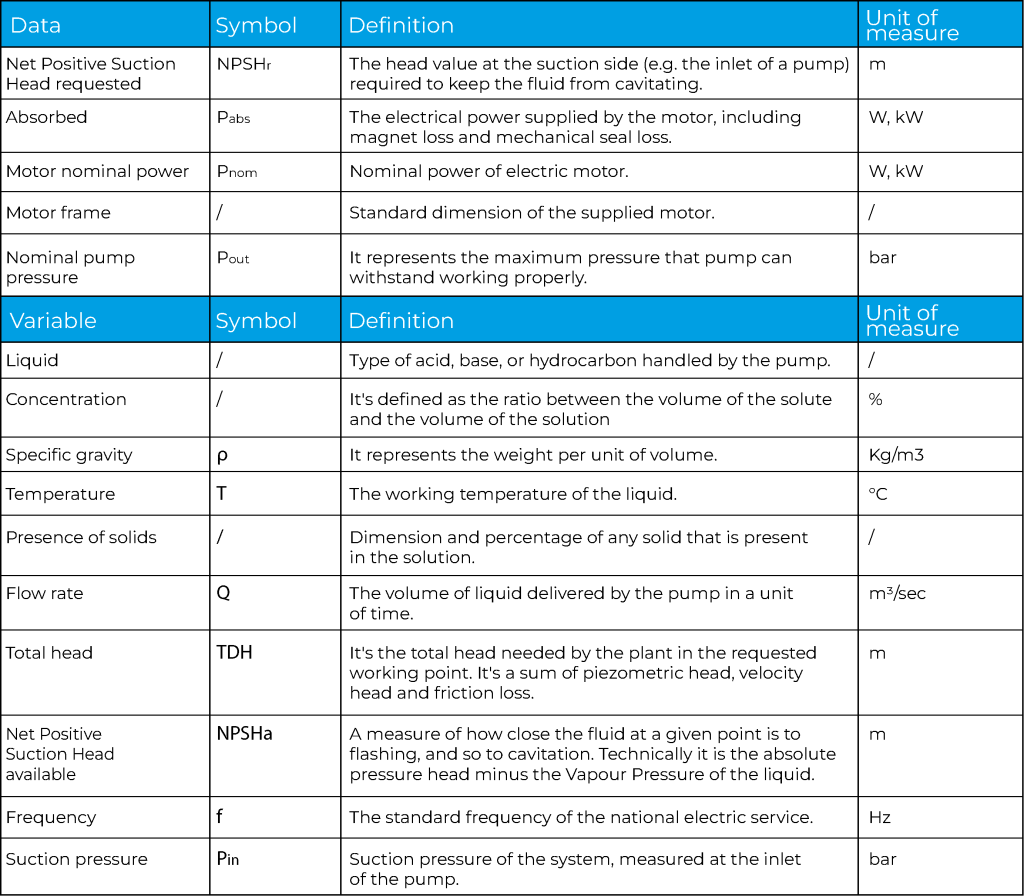
To summarize, all the essential parameters discussed are laid out in the following table. This provides a checklist of the data and variables required for a correct pump selection. It is crucial to accurately define these values to proceed with the identification of the most suitable pump.

how to select a pump - parameters

Conclusion: A data-driven decision

The pump selection process is a meticulous engineering task that requires a thorough analysis of fluid properties, system hydraulics, and environmental conditions. By systematically evaluating each parameter—from chemical compatibility and viscosity to total dynamic head and ATEX requirements—you can ensure the selection of a pump that is not only effective but also highly reliable, energy-efficient, and safe. This data-driven approach goes beyond mere guesswork, guaranteeing a robust solution that will serve your process effectively for years to come.

For expert assistance in analyzing these complex parameters and selecting the ideal pump for your application, contact our team at info@gemmecotti.com. 


Read More
Goodbye leaks: discover GemmeCotti’s mag drive design

Goodbye leaks: discover GemmeCotti’s mag drive design

When handling acids and dangerous liquids, safety and reliability are not optional. For industries that depend on the safe transfer of corrosive materials, finding the right chemical pump is a critical decision. GemmeCotti has been the Italian specialist in this field since 1992, engineering advanced mag drive pumps designed for total safety and efficiency. Our innovative mag drive systems represent the pinnacle of leak-proof technology.

How does the magnetic drive design work?

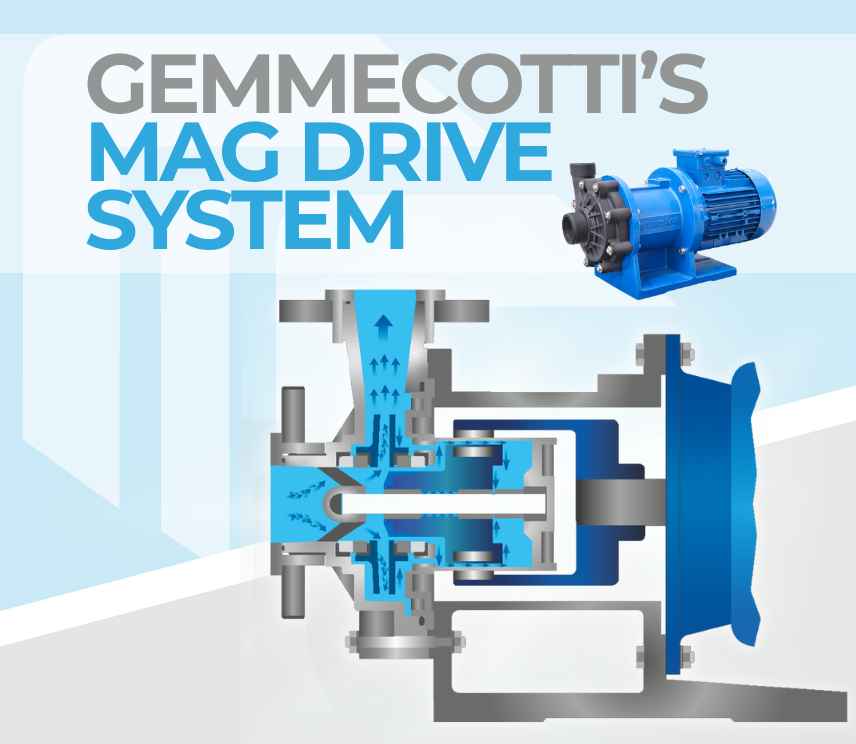
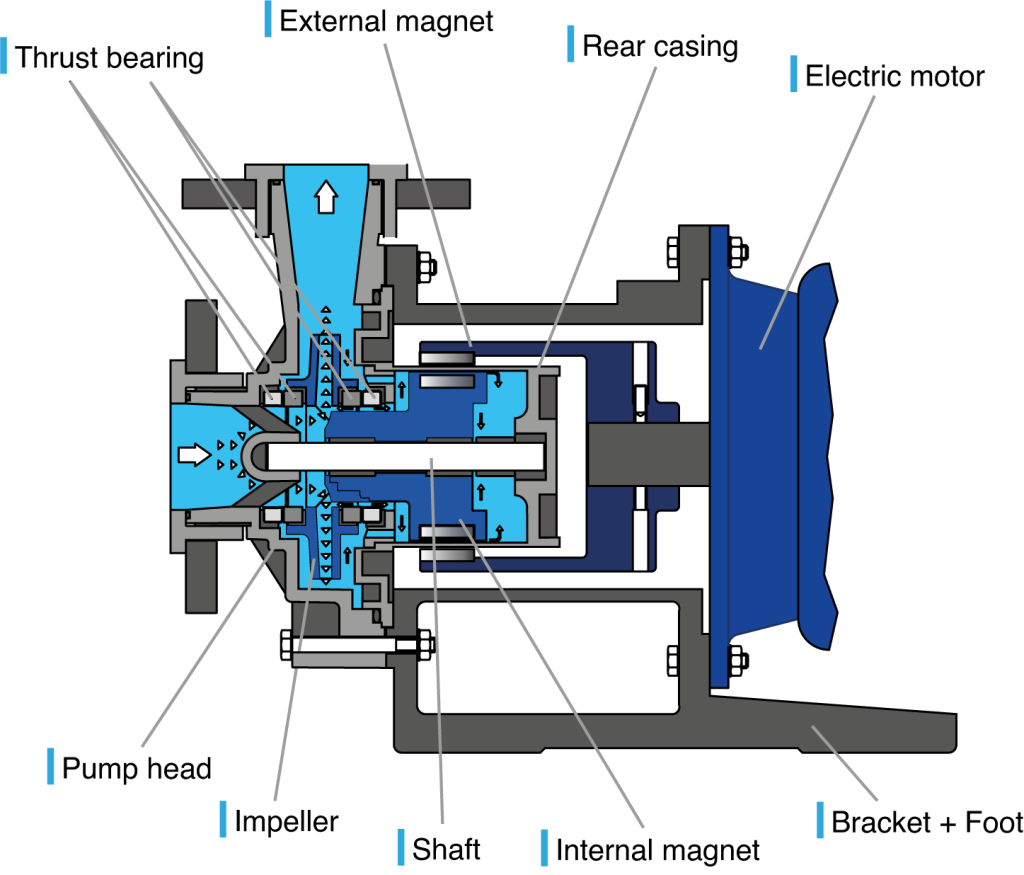
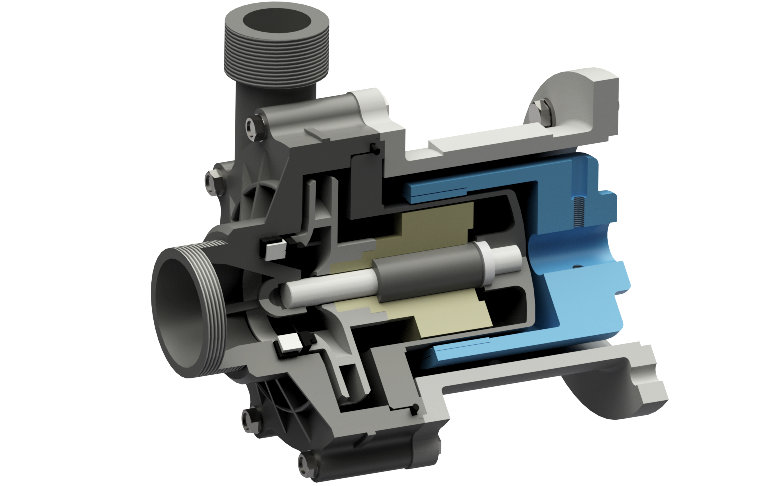
mag drive design


The most significant vulnerability in a conventional pump is the mechanical seal, which is the most frequent source of dangerous leaks and costly maintenance. GemmeCotti’s technology solves this problem with a special sealless magnetic drive design.

So, how does it work? The principle is simple:

  • An external magnet on the motor shaft transmits torque through a stationary rear casing.
  • This drives an internal magnet, which is hermetically sealed inside the
    chemical pump.
  • The internal magnet is connected to the impeller, which moves the fluid.
  • The rear casing acts as a solid, leak-proof barrier between the hazardous liquid and the atmosphere, resulting in a hermetically sealless design that offers total fluid containment.

This core design is what makes mag drive pumps the superior choice for difficult applications.

Key advantages of our mag drive design

The innovative design of our mag drive systems offers tangible benefits for any operation requiring a high-performance chemical pump.

Goodbye leaks: discover GemmeCotti’s mag drive design


  • 100% leak-proof performance: our pumps guarantee zero leakage of chemicals and fugitive emissions. This ensures total operator safety and protects the environment from hazardous spills.
  • Drastically reduced maintenance: with no mechanical seals to wear out or replace, maintenance costs and process downtime are minimized.
  • High reliability: the simple, robust design of our mag drive pumps leads to a longer service life and dependable performance, even when handling corrosive and dangerous liquids.
  • Simplified installation: the magnetic coupling removes the need for time-consuming pump-motor alignment, saving time and preventing common installation errors.
  • Efficient power transfer: a high-torque magnetic coupling ensures that power is transferred from the motor to the pump smoothly and effectively.

Choosing the right chemical pump: our range of mag drive pumps

To meet the diverse needs of chemical handling, GemmeCotti offers a wide range of mag drive pumps, with each design engineered to provide a reliable and efficient solution.

  • Mag-drive centrifugal pumps: these are the ideal choice for most standard to high-flow chemical transfer and processing applications where reliability and efficiency are paramount.
mag drive centrifugal pumps


  • Mag-drive turbine pumps: suitable for chemical handling in applications requiring relatively low flow and high head. Turbine pumps are reversible and can pump low-viscosity fluids also containing up to 20% entrained gas.
mag drive turbine pumps


  • Mag-drive rotary vane pumps: these are specialized anti-corrosion industrial pumps suitable for pumping a variety of fluids, including hydrocarbons, solvents, heat transfer oils, refrigerants, and even cryogenic or radioactive liquids. These pumps are designed for tasks requiring high pressure at low flow rates, delivering the smooth and steady performance needed for dosing, sampling, and circulation
mag drive rotary vane pumps


Trust GemmeCotti for your mag drive pump needs

For a safer, more reliable, and low-maintenance pumping solution, trust the Italian specialists in sealless magnetic drive technology. If your application demands a chemical pump with zero-leak capabilities, our mag drive systems are the perfect choice.

We are ready to find the perfect pump for your needs. Contact us for a free quotation or more information at info@gemmecotti.com or call +39 02 96460406.

In the absence of mechanical seals, how is the system’s hermetic isolation from the atmosphere technically guaranteed?

he system replaces the dynamic mechanical seal with a static rear casing. This component acts as a solid physical barrier between the process fluid and the external environment, creating a hermetically sealed design that structurally eliminates leak paths for fugitive emissions or hazardous liquid spills.

Read More
HAOD-Air-operated double diaphragm pumps

Reliability, safety, and versatility: 3 reasons to choose GemmeCotti AODD pumps

In any industrial plant, overall efficiency also depends on the ability of each component to operate without interruption. An air-operated double diaphragm pump is no exception; it is the heart of many fluid transfer processes. GemmeCotti has designed and built the ideal pump for this need.

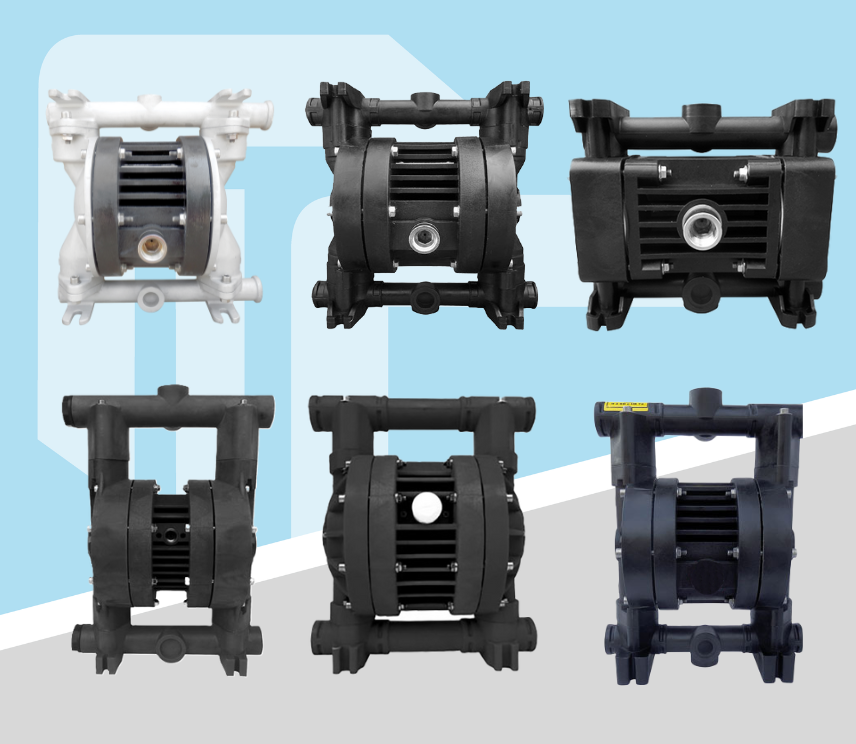
GemmeCotti HAOD Air-operated double diaphragm pump

The HAOD pump is a positive displacement pump that uses compressed air as its power source. Inside, two flexible diaphragms move, creating an alternating suction and discharge action. This simple yet effective design allows for the transfer of a wide variety of fluids, from clean, low-viscosity liquids to slurries and liquids containing solids.

Choosing the right model means guaranteeing operational continuity. GemmeCotti’s HAOD series pumps, born from consolidated Italian engineering experience, are designed with three fundamental aspects in mind that make them the ideal choice for the most demanding applications.

GemmeCotti AODD pumps

1. Total operational reliability

The design goes beyond the individual component, considering the entire product from the outset—a cornerstone for achieving total reliability.

  • Advanced anti-stall pneumatic circuit: at the core of our pumps is a proven and efficient anti-stall pneumatic circuit, which ensures smooth and safe operation, even at low air pressures or in slow cycles. This design prevents blockages and ensures constant operation.
  • Dry-running capability: HAOD pumps can run dry for extended periods without sustaining any damage. This is a crucial advantage for process safety, especially in applications such as drum unloading or tank emptying, where the pump can continue to work even after the liquid has run out.
  • Robustness against closed discharge: unlike other positive displacement pumps, GemmeCotti HAOD pumps can operate with a closed discharge without problems, increasing safety and operational flexibility within the plant.

2. Intrinsic safety: the best choice for critical environments and hazardous fluids

When handling aggressive or flammable liquids, safety is not an option. HAOD pumps are intrinsically safer for these applications.

  • ATEX certification: the HAOD series is available in an ATEX-certified version, making it suitable for installation in areas with potentially explosive atmospheres.
  • Ideal for aggressive liquids and solvents: thanks to their pneumatic operation, they are the perfect solution for pumping solvents and flammable fluids, a fundamental requirement in the chemical and petrochemical industries.


3. Versatility and superior chemical compatibility

Every application has its challenges. That’s why we have designed a versatile industrial pump capable of adapting to different fluids and conditions.

  • Wide choice of construction materials: chemical compatibility is guaranteed by a comprehensive selection of materials, making the HAOD a corrosion-resistant pump ideal for every need:
    • Polypropylene (PP) pump: an excellent choice for a wide variety of acids and bases. It is the most common solution for an acid pump.
    • PVDF pump: offers superior chemical and thermal resistance for the most aggressive fluids and for temperatures up to 95°C.
    • AISI 316 stainless steel pump: Perfect for applications requiring high mechanical strength or compliance with specific standards, such as in the food and pharmaceutical sectors.
  • Self-Priming pump: HAOD pumps have excellent dry suction capability, making them outstanding self-priming pumps for drawing fluid from significant heights.
  • Handles solids and viscous fluids: their design enables them to pump abrasive, viscous, and solids-containing fluids without damage, making them the ideal solution for slurries and particle-laden liquids.

Reliability, safety, and versatility are the hallmarks of GemmeCotti HAOD diaphragm pumps.

For technical advice specific to your application needs, please contact GemmeCotti directly (info@gemmecotti.com).

Read More
Newsletter